WCC
Presumed Bound: Redefining the Limits of Judicial Intervention in Cheque Dishonour
On this page
Introduction
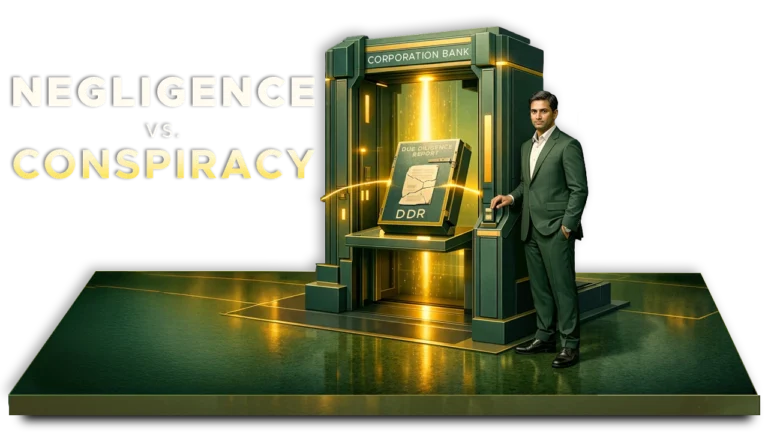
Can a signed promise to pay be rendered meaningless before the courtroom doors even fully open for trial? For a creditor holding a dishonoured cheque, the legal path to justice often feels like an obstacle course, yet a recent intervention by the Supreme Court has ensured that this journey is not cut short by premature judicial interference. On December 19, the Apex Court held that High Courts are forbidden from quashing cheque bounce proceedings by conducting “roving enquiries” into disputed facts at a pre-trial stage, particularly when the law presumes the cheque was issued for a valid debt.
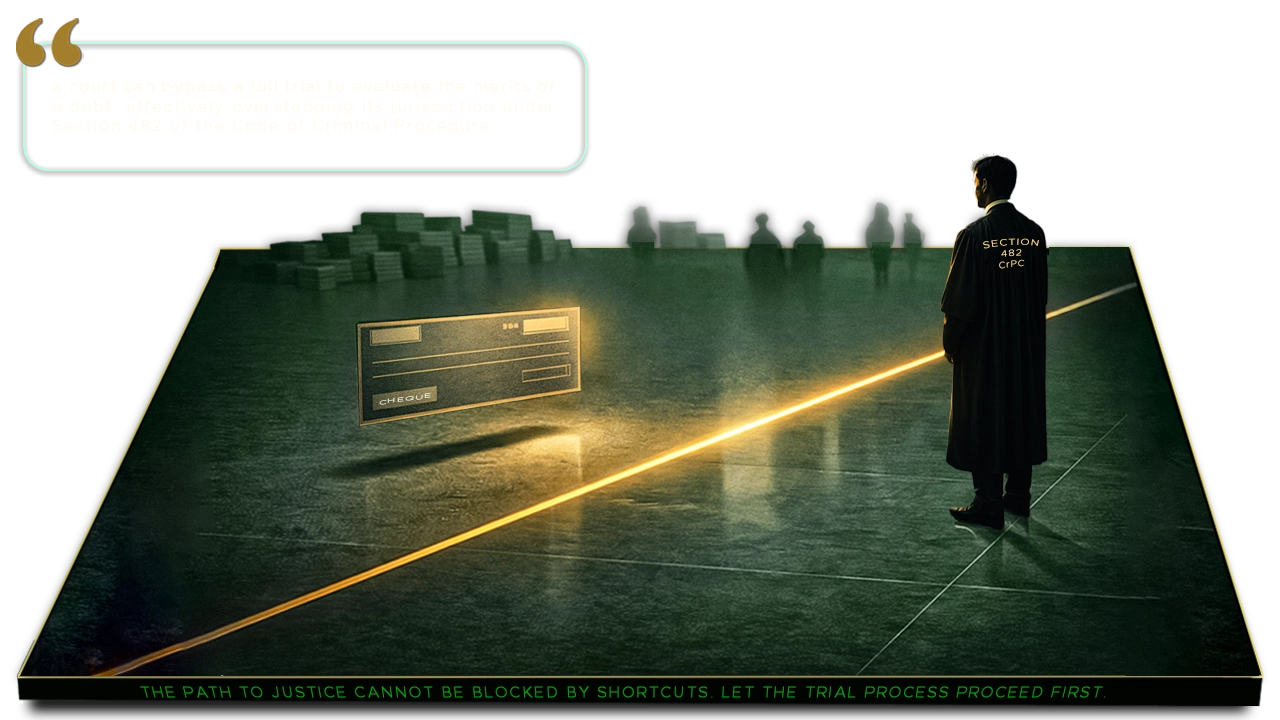
The core issue before the Bench in M/S Sri Om Sales Versus Abhay Kumar @ Abhay Patel & Anr1., was whether a court can bypass a full trial to evaluate the merits of a debt, effectively overstepping its jurisdiction under Section 482 of the Code of Criminal Procedure. This legal tug-of-war reached the highest court after the Patna High Court quashed a complaint by questioning the existence of a liability before any evidence was formally recorded.
In the ensuing legal battle, the complainant maintained that a prima facie case must lead to a trial, while the accused sought to terminate the proceedings by arguing that no legally enforceable debt actually existed. By reinforcing the boundary between a preliminary review and a full-scale trial, the Court has provided much-needed clarity on the limits of judicial discretion. The following discussion will explore the underlying legal principles and the weight of statutory presumptions which formed the basis of this significant judgment.
Can the High Court prematurely terminate a criminal trial by weighing evidence before it even begins?
The boundary between preventing an abuse of legal process and overstepping judicial authority is often thin, but the Supreme Court has now drawn a firm line to protect the integrity of the trial process. At the heart of this controversy is the scope of Section 482 of the Code of Criminal Procedure. This power is meant to secure justice and not to substitute the High Court’s judgment for a full scale trial. The Court observed that a complaint under Section 138 of the Negotiable Instruments Act often contains all the necessary ingredients. These include the issuance of a cheque, its dishonour for insufficient funds, and the subsequent failure to pay despite a legal notice. In such cases, it is not for the High Court to embark on a roving enquiry into whether the debt truly existed. By doing so, the High Court essentially conducts a mini trial behind closed doors and deprives the complainant of the opportunity to present evidence in the proper forum.
This judicial restraint is deeply rooted in the statutory presumption offered by Section 139 of the Negotiable Instruments Act. This provision is not a mere procedural formality. It is a substantive rule of law that mandates a court to presume that a cheque was issued for the discharge of a debt or liability unless the contrary is proved. In the landmark case of Maruti Udyog Ltd. v. Narender2, the Apex Court had previously established that this presumption must be drawn at the initial stage. This makes it unjustifiable for a High Court to quash a complaint by accepting the defense of the accused prematurely. This was further solidified in Rangappa v. Sri Mohan3, where the Court clarified that the presumption under Section 139 specifically includes the existence of a legally enforceable debt. This shifts the burden of proof to the accused to be settled during the trial and not at the threshold.
The danger of allowing High Courts to interfere at the nascent stage of a case was eloquently captured in the Court’s reference to Rajeshbhai Muljibhai Patel v. State of Gujarat4. In that instance, the Court warned against resolving disputed questions of fact regarding the nature of a transaction before the evidence is even recorded. When a High Court attempts to weigh the merits of such a dispute, it risks giving the accused an unmerited advantage. This sentiment was echoed in Rathish Babu Unnikrishnan v. State5 (NCT of Delhi), where the Supreme Court noted that scuttling the criminal process early can lead to grave and irreparable consequences. For a complaint to be quashed before trial, the defense must be of an unimpeachable quality that leaves no room for doubt. Otherwise, the balance of convenience must favor the complainant who holds the statutory presumption in their favor.
Ultimately, the Supreme Court found that the Patna High Court had erred by ignoring these settled principles. By restoring the complaint to the Magistrate, the Court reinforced that the discharge of liability is a matter of evidence rather than speculation. While the accused maintains the right to rebut the presumption, that battle belongs in the trial court where witnesses are cross-examined and documents are scrutinized. This ruling ensures that the summary nature of cheque bounce cases is not undermined by lengthy pre-trial litigations that serve only to delay the inevitable day of reckoning. The judgment stands as a testament to the principle that while the gates of justice are open to all, they cannot be bypassed through a premature evaluation of facts that deserve their day in court.
Conclusion
Moving forward, this judgment reinforces a crucial shield for creditors, ensuring that the statutory protections of the Negotiable Instruments Act are not diluted by early judicial skepticism. By restricting the High Courts from weighing evidence prematurely, the Supreme Court has signaled that the specialized nature of cheque bounce cases requires a strict adherence to procedural timelines. This clarity is expected to reduce the backlog of quashing petitions that often stall recovery proceedings for years. However, it also places a significant burden on the accused to preserve their defense for the trial stage, effectively raising the stakes for every commercial transaction where a cheque is used as security.
The ruling also invites deeper questions regarding the “exceptional circumstances” where judicial intervention might still be warranted. Legal scholars and practitioners may now ask where the line is drawn for evidence of “unimpeachable quality.” If a defendant possesses a document that undeniably proves the debt was settled, must they still endure a grueling multi-year trial simply because a roving enquiry is barred at the threshold? The tension between preventing the abuse of the legal process and the mandatory presumption of guilt in financial instruments remains a delicate tightrope for the Indian judiciary to walk.
As we look to the future, the ramifications of this decision will likely be felt in how complaints are drafted and how defenses are structured. Litigants must now approach the pre-trial stage with the understanding that the “balance of convenience” is firmly tilted in favor of the complainant. While this strengthens the credibility of cheques as a reliable payment mechanism, it also underscores the necessity of a robust and speedy trial system. The true test of this judgment will lie in whether the trial courts can rise to the occasion and adjudicate these disputes with the efficiency that the Supreme Court has now mandated by keeping the gates of trial firmly open.
Citations
- M/S Sri Om Sales Versus Abhay Kumar @ Abhay Patel & Anr.SLP (Crl.) No. 8703/201
- Maruti Udyog Ltd. v. Narender(1999) 1 SCC 113
- Rangappa v. Sri Mohan(2010) 11 SCC 441
- Rajeshbhai Muljibhai Patel v. State of Gujarat (2020) 3 SCC 794
- Rathish Babu Unnikrishnan v. State (2022) 20 SCC 661
Expositor(s): Adv. Anuja Pandit
This article is for information only and is not legal advice. Read the disclaimer