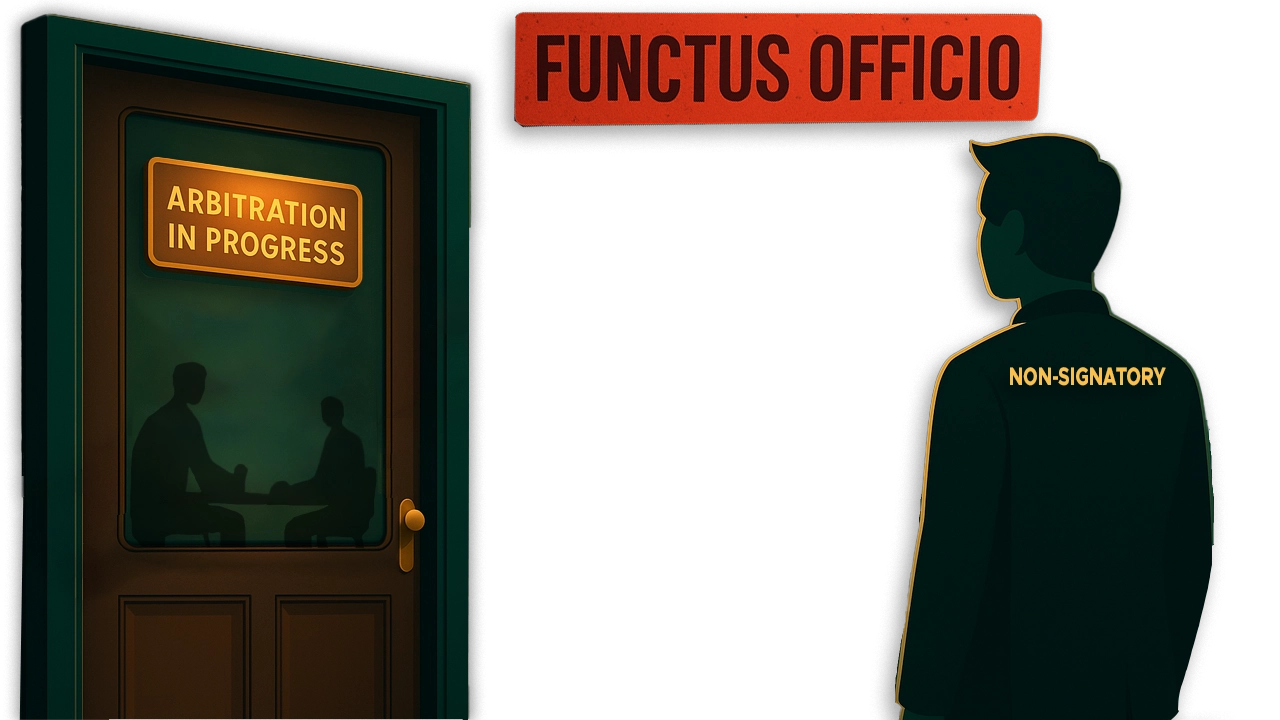
One of the recurring questions under the Insolvency and Bankruptcy Code, 2016 (IBC) concerns the fate of pending civil suits and arbitral proceedings once a resolution plan receives judicial approval. Can an operational creditor whose pre-CIRP claim remains sub judice and is admitted only at a notional value of ₹1 continue pursuing litigation after approval of the resolution plan?
In M/s Tata Steel Ltd. v. Varsha & Anr1, the Supreme Court answered this question in the negative. The decision is particularly significant for successful resolution applicants, insolvency professionals and operational creditors, as it clarifies whether pending civil and arbitral proceedings may survive approval of a resolution plan. Applying Section 31(1) of the IBC together with the approved Resolution Plan, the Court held that pre-CIRP civil suits and arbitral proceedings which had not crystallised into determinable and quantified claims stood abated, extinguished, waived or withdrawn upon approval of the Resolution Plan. In doing so, the Court reinforced the finality of approved resolution plans while further strengthening the “clean slate” doctrine underpinning the IBC.
Factual Background
Before the commencement of the Corporate Insolvency Resolution Process (CIRP) against Bhushan Steel Limited (BSL), Respondent No. 1 (Varsha) instituted a summary recovery suit claiming approximately ₹38.89 lakhs, while Masyc Projects Pvt. Ltd. initiated six arbitral proceedings claiming approximately ₹31.30 crores. Both creditors subsequently submitted their claims before the Resolution Professional (RP).
The Interim List of Operational Creditors admitted these disputed claims at a notional value of ₹1 each and recorded that the liability remained subject to adjudication. Tata Steel, the Successful Resolution Applicant (SRA), thereafter submitted a Resolution Plan voluntarily earmarking ₹1,200 crores for operational creditors despite the liquidation value available to them being nil. Subsequently, the Final List of Operational Creditors omitted the earlier note linking the disputed claims to pending adjudication and instead recorded that claims pending before various authorities had been verified at a notional amount of ₹1.
The Committee of Creditors approved the Resolution Plan on 20 March 2018, following which it received approval from the National Company Law Tribunal (NCLT) on 15 May 2018. Tata Steel thereafter sought dismissal of the pending civil suit and arbitral proceedings. The Trial Court, Sole Arbitrator and the Bombay High Court declined to terminate the proceedings, prompting Tata Steel to approach the Supreme Court.
Before the Supreme Court, Tata Steel contended that Section 31(1) of the IBC and the “clean slate” doctrine precluded continuation of undecided pre-CIRP claims after approval of the Resolution Plan. It argued that omission of the earlier note from the Final List demonstrated that the disputed claims had been treated as quantified at ₹1 for the purposes of the Resolution Plan.
Conversely, the respondents argued that assigning a notional value of ₹1 merely preserved the pending proceedings until final adjudication. They relied upon alleged carve-outs in the Resolution Plan, proposed a “face value reservation mechanism” for disputed claims, alleged manipulation in the preparation of the Final List of Creditors and contended that extinguishing pending MSME claims would result in unjust enrichment.
Supreme Court’s Decision
Allowing the appeals, the Supreme Court began by observing that the Final List of Operational Creditors and the approved Resolution Plan had attained finality. While Varsha never challenged the Final List, Masyc withdrew its challenge before the NCLT. Consequently, the treatment accorded to the disputed claims under the approved plan became binding upon all stakeholders.
The Court also rejected allegations of fraud. Distinguishing Greater Noida Industrial Development Authority v. Prabhjit Singh Soni2, it observed that no application seeking recall of the approval order under Rule 11 of the NCLT Rules, 2016 had ever been filed. In the absence of such proceedings, allegations of fraud could not be entertained in collateral litigation.
Interpreting Section 31(1) of the IBC together with the approved Resolution Plan, the Court emphasised that once a resolution plan attains finality, it is the treatment accorded to creditors under the approved plan not the pendency of the underlying proceedings that determines the rights and liabilities of the parties. On a harmonious reading of the Resolution Plan as a whole, the Court held that the omission of the earlier note and incorporation of the revised note in the Final List indicated that the disputed claims had been treated as quantified at ₹1 for the purposes of the Resolution Plan. Accordingly, the contention that the notional valuation merely preserved pending litigation was rejected.
The Court further held that permitting uncertain or unquantified claims to survive approval of the Resolution Plan would undermine the commercial certainty intended by the IBC and erode the “clean slate” doctrine recognised in earlier decisions. It observed that allowing unresolved claims to resurface years after plan approval would discourage prospective resolution applicants by exposing them to unforeseen liabilities after assuming control of the corporate debtor. The ₹200 crore corpus earmarked for non-critical operational creditors was intended only for claims that had crystallised and formed part of the claims position relevant to the distribution contemplated under the approved Resolution Plan. Interpreting Regulation 12(2) of the CIRP Regulations as applicable at the relevant time, together with the Resolution Plan, the Court held that operational creditor liabilities were required to be crystallised and quantified within the claims framework applicable before the CoC’s approval of the plan, while Clause 8.2.2(vi) separately addressed further claims admitted before approval by the Adjudicating Authority, as any subsequent enhancement would disrupt the pro-rata distribution mechanism already contemplated.
The Court also rejected the respondents’ reliance on the doctrine of contra proferentem and the proposed “face value reservation mechanism”, holding that neither could be invoked to rewrite an approved Resolution Plan that had already attained finality. Accordingly, it concluded that, under the approved Resolution Plan and Section 31(1) of the IBC, the pending civil suit and arbitral proceedings stood abated, extinguished, waived and withdrawn.
In reaching its conclusions, the Court relied upon Committee of Creditors of Essar Steel India Ltd. v. Satish Kumar Gupta3 to reaffirm the “clean slate” doctrine, Ghanashyam Mishra & Sons Pvt. Ltd. v. Edelweiss Asset Reconstruction Co. Ltd.4 for the principle that claims not forming part of an approved resolution plan stand extinguished, and JSW Steel Ltd. v. Pratishtha Thakur Haritwal5 to reiterate that liabilities must be identified and addressed during the CIRP. It also referred to Uttar Pradesh Power Corporation Ltd. v. Bhushan Steels6 and Strips Ltd. Kalyani Transco v. Bhushan Power7 and Steel Ltd., K. Sashidhar v. Indian Overseas Bank8 and Swiss Ribbons Pvt. Ltd. v. Union of India9 in reaffirming the settled principles governing the commercial wisdom of the Committee of Creditors, the jurisdiction of the Adjudicating Authority and the legislative distinction between financial and operational creditors.
Conclusion
In its Afterword, the Supreme Court acknowledged that the IBC continues to place small operational creditors, particularly MSMEs, in a significantly disadvantaged position within the repayment framework and observed that Parliament and the Law Commission may consider reforms to achieve a more balanced repayment framework.
The judgment underscores the importance of ensuring that disputed claims are appropriately adjudicated or reflected before approval of a resolution plan. Creditors seeking to challenge the treatment of their claims must pursue timely remedies before the Adjudicating Authority rather than attempting to preserve parallel civil or arbitral proceedings. For successful resolution applicants, the decision provides substantial commercial certainty by reaffirming that liabilities not preserved under an approved Resolution Plan cannot subsequently re-emerge through pending litigation. The judgment reinforces that the finality of an approved Resolution Plan is central to the IBC’s insolvency framework and that the promise of a “clean slate” cannot be undermined by the subsequent revival of unresolved pre-CIRP claims.
Citations
Expositor(s): Adv. Jahnobi Paul