Arbitration · Supreme Court
Supreme Court Clarifies Limits of Article 227 Challenges to Section 16 Orders in Manash Kamal Bezboruah v. Bokahola Tea Company
On this page
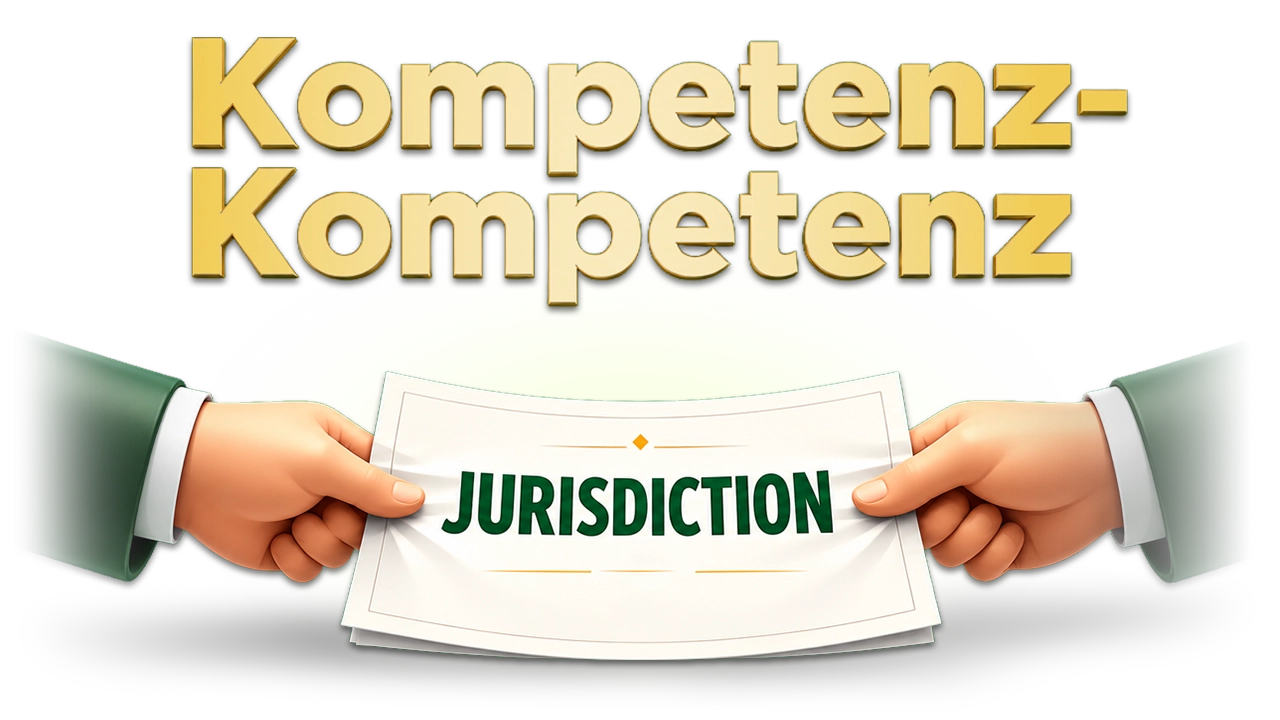
The Supreme Court’s decision in Manash Kamal Bezboruah v. M/s Bokahola Tea Company Private Limited & Ors.1 provides significant guidance on the scope of judicial intervention during ongoing arbitral proceedings. Reaffirming the principles of minimal judicial intervention under the Arbitration and Conciliation Act, 1996 (“Arbitration Act”) and the doctrine of kompetenz-kompetenz embodied in Section 16, the Court held that although the High Courts’ supervisory jurisdiction under Article 227 of the Constitution remains constitutionally preserved, its exercise during pending arbitral proceedings must be confined to exceptional cases involving a patent lack of inherent jurisdiction. The judgment further clarifies that detailed jurisdictional objections, including disputes concerning non-signatories, ordinarily fall within the arbitral tribunal’s domain and are subject to judicial review only through the statutory mechanism prescribed under the Arbitration Act.
Factual Matrix
The dispute arose from M/s Boloma Tea Company, a family-run partnership established in 1948, together with its associated corporate entities, namely M/s Bokahola Tea Company Pvt. Ltd., M/s Kasojan Tea Company Pvt. Ltd., and M/s Bokahola Investment Pvt. Ltd.
In 2012, the Appellant instituted a civil suit seeking rendition of accounts and alleging financial mismanagement. During the proceedings, Respondent No. 7 invoked Section 8 of the Arbitration Act on the strength of the arbitration clause contained in the 1976 Partnership Deed. The Trial Court and the Gauhati High Court declined to refer the dispute to arbitration, principally because several parties were non-signatories to the arbitration agreement.
The dispute ultimately reached the Supreme Court, which, by a consent order dated 21 November 2024, appointed a Sole Arbitrator to adjudicate the disputes. Although Respondent Nos. 1 to 3 were parties to those proceedings and had been duly served, they neither opposed the arbitral reference nor sought review or modification of the consent order.
During the arbitration, Respondent Nos. 1 to 3 sought deletion of their names from the proceedings. Treating these applications as jurisdictional objections under Section 16, the Arbitral Tribunal rejected them, relying upon both the Supreme Court’s consent order and the Group of Companies doctrine.
Instead of pursuing the statutory arbitral framework, the corporate respondents invoked the Gauhati High Court’s supervisory jurisdiction under Article 227, which stayed the arbitral proceedings against them and held the revision petition to be maintainable. The Appellant challenged those orders before the Supreme Court.
The Supreme Court’s Decision
The principal issue before the Supreme Court was whether the High Court was justified in entertaining a petition under Article 227 challenging an order of the Arbitral Tribunal rejecting jurisdictional objections under Section 16 of the Arbitration Act.
Allowing the appeals, the Supreme Court set aside the High Court’s orders and dismissed the revision petition.
The Court reiterated that the Arbitration Act constitutes a self-contained code intended to secure expeditious dispute resolution with minimal judicial intervention. While Section 5 restricts judicial intervention except where expressly provided, Article 227 forms part of the Constitution’s basic structure and therefore cannot be excluded by legislation. The real question, however, concerns the circumstances in which the High Court ought to exercise that jurisdiction during an ongoing arbitration.
Relying upon SBP & Co. v. Patel Engineering Ltd.2, the Court reaffirmed that parties ordinarily cannot challenge interlocutory orders passed by an arbitral tribunal during pending arbitral proceedings. Unless an appeal is expressly provided under Section 37, jurisdictional determinations under Section 16 must ordinarily await the final award and be challenged under Section 34.
The Court further relied upon Deep Industries Ltd. v. ONGC3 and Punjab State Power Corporation Ltd. v. Emta Coal Ltd.4 to reiterate that Article 227 jurisdiction may be exercised only where an arbitral order suffers from a patent lack of inherent jurisdiction. Such a defect must be self-evident and apparent on the face of the record, rather than one requiring detailed factual or legal examination. Mere disagreement with the Tribunal’s reasoning cannot justify supervisory intervention.
The Court also referred to M/s Tarini Prasad Mohanty v. M/s Sunflag Iron and Steel Company Limited5, observing that courts must remain mindful of the Arbitration Act’s statutory scheme while exercising constitutional jurisdiction. Although the availability of an alternative remedy does not affect the maintainability of a writ petition, it significantly raises the threshold for its entertainment where Parliament has consciously limited judicial intervention pending completion of arbitral proceedings.
Kompetenz-Kompetenz and Non-Signatory Determinations
A significant aspect of the judgment concerns the determination of non-signatory parties.
Relying upon the Constitution Bench decision in Cox and Kings Ltd. v. SAP India Pvt. Ltd.6, the Court observed that while the referral court undertakes only a prima facie examination of the arbitration agreement, the detailed determination of whether a non-signatory constitutes a “veritable party” requires an examination of the parties’ relationships, conduct and surrounding commercial circumstances. Such questions ordinarily fall within the jurisdiction of the arbitral tribunal under Section 16, thereby giving practical effect to the doctrine of kompetenz-kompetenz.
The Court held that the High Court ought not to have interrupted the arbitral proceedings merely because Respondent Nos. 1 to 3 questioned the Tribunal’s jurisdiction. Equally significant was the Court’s observation that the respondents had remained absent during the earlier proceedings before the Supreme Court despite being served and had never sought review or modification of the consent order appointing the Sole Arbitrator. Permitting parties to invoke constitutional remedies at a later stage to challenge issues that could have been addressed earlier would unnecessarily prolong arbitration and undermine the legislative objective of efficient dispute resolution.
Importantly, however, the Supreme Court did not determine whether Respondent Nos. 1 to 3 were actually bound by the arbitration agreement. Instead, while setting aside the High Court’s interference, it directed the Arbitral Tribunal to independently determine their non-signatory status, uninfluenced by the Supreme Court’s observations, before proceeding with the arbitration.
Conclusion
The judgment provides valuable guidance on the interplay between Section 16, Article 227, and the doctrine of kompetenz-kompetenz. It reiterates that although constitutional supervision remains available, it cannot ordinarily be invoked to challenge interlocutory arbitral orders unless there exists a patent lack of inherent jurisdiction. While the referral court undertakes only a prima facie examination, detailed questions concerning non-signatories and the Tribunal’s jurisdiction are ordinarily matters for determination by the arbitral tribunal, with judicial review generally deferred until proceedings conclude under Section 34.
The decision is likely to discourage attempts to invoke constitutional remedies as a means of interrupting ongoing arbitral proceedings. By reaffirming that jurisdictional objections should ordinarily be resolved within the arbitral framework itself, the Supreme Court strengthens the finality and efficiency of arbitration while preserving constitutional supervision only for the rare case of manifest jurisdictional error. The ruling therefore represents another important step in consolidating India’s reputation as an arbitration-friendly jurisdiction committed to respecting party autonomy and ensuring expeditious resolution of commercial disputes.
Citations
- Manash Kamal Bezboruah v. M/s Bokahola Tea Company Private Limited & Ors., 2026 INSC 701 ↩︎
- SBP & Co. v. Patel Engineering Ltd., (2005) 8 SCC 618 ↩︎
- Deep Industries Ltd. v. ONGC, (2020) 15 SCC 706 ↩︎
- Punjab State Power Corporation Ltd. v. Emta Coal Ltd., 2020 SCC OnLine SC 1165 ↩︎
- M/s Tarini Prasad Mohanty v. M/s Sunflag Iron and Steel Company Limited, 2026 INSC 566 ↩︎
- Cox and Kings Ltd. v. SAP India Pvt. Ltd., (2024) 4 SCC 1 ↩︎
Expositor(s): Adv. Jahnobi Paul
This article is for information only and is not legal advice. Read the disclaimer