White Collar Crime
From Two to One? Supreme Court Examines FSSAI’s Front-of-Pack Warning Framework
On this page
In 3S And Our Health Society v. Union of India & Anr.1 The Supreme Court examined the proposed Front-of-Pack Labelling (FoPL) framework being considered by the Food Safety and Standards Authority of India (FSSAI) for packaged food products. The Court’s order dated September 10, 2026 records substantial progress by FSSAI but identifies several aspects of the proposed framework that require clarification before implementation.
In its affidavit dated August 28, 2026, FSSAI proposed providing information relating to specified nutrients of concern through pictorial Front-of-Pack warnings. The proposal contemplated a prominent red-coloured hexagonal label for products considered high in specified nutrients, with declarations such as “HIGH FAT”, “HIGH SUGAR”, “HIGH SALT” and “HIGHLY SWEETENED BEVERAGE”. The proposed warning was to be displayed in a font one point larger than that used in the nutrition information table at the back of the package.
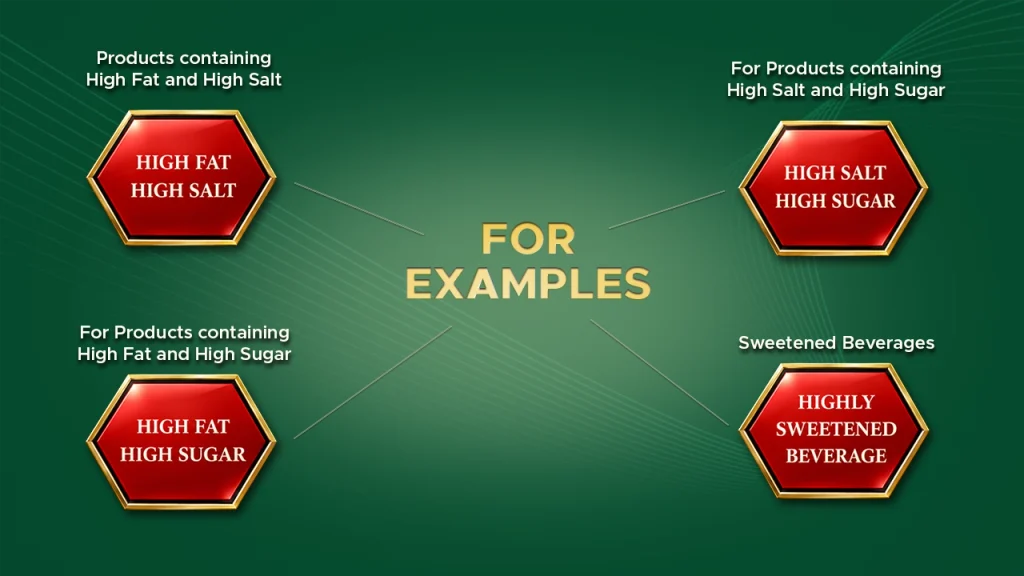
The written proposal contemplated a two-phase implementation. Phase I would cover products high in two or more specified nutrients—added fat, added sugar and salt—as well as specified sweetened beverages. Phase II would extend the warning to products high in any one of these nutrients. FSSAI stated that phased implementation was intended to facilitate consumer acceptability and provide industry adequate time for reformulation.
The Court questioned the basis for this distinction. It noted that the two-phase structure required a clear scientific and regulatory justification, particularly because sugar, salt and fat may independently constitute nutrients of concern. The Court also questioned whether an absence of a fixed timeline could result in Phase II being indefinitely postponed. It therefore sought a reasonable, scientifically justified and clearly defined timeline if the two-phase structure were retained.
Importantly, the position discussed in the hearing subsequently evolved. According to the contemporaneous report of the hearing, FSSAI indicated that the two-phase approach was only a proposal and that it could consider a single-phase system covering products high in even one nutrient of concern. This should not be confused with a final direction of the Court or a notified regulation.
The Court also examined the proposed nutrient thresholds and the classification of food products. It referred to the thresholds contained in the FSSAI proposal and questioned whether differences in processing and food categories should be reflected in the manner in which thresholds are determined. It specifically sought clarification regarding the treatment of different categories of processed foods and the specified sweetened beverages proposed to be covered in Phase I.
The Court’s examination extended beyond the question of which products would receive a warning. It also considered how the warning should appear on the package. The Court noted that the proposal was substantially word-based, whereas an effective FoPL should also take into account differences in literacy, language and consumer comprehension across India. It therefore asked FSSAI to reconsider whether pictorial representations of individual nutrients should accompany the words.
The Court also questioned the proposal for a single composite hexagon where a product is high in more than one nutrient. It asked why separate hexagons—such as “High Sugar”, “High Fat” and “High Salt”—should not instead be used for the respective nutrients. The Court did not itself prescribe separate labels; it sought FSSAI’s response on the rationale for its proposed design.
Similarly, the Court sought greater clarity on the colour, dimensions, placement and proportionality of the warning. The FSSAI proposal stated that the warning would be red and prominent, but the Court noted that the size and placement of the label are directly connected with whether it remains conspicuous and readily legible to consumers.
The Court further revisited the basis on which the nutrients themselves should be identified. It referred to the minutes of a 2021 stakeholder consultation, which recorded a consensus concerning the use of “Total Sugars” and “Saturated Fat” for FoPL purposes. FSSAI’s current proposal, however, referred to added sugar and added fat. The Court therefore asked whether FSSAI’s position had changed since the earlier consultation and, if so, how the concerns underlying that change would be addressed. It also specifically raised the question of whether trans fat should be reflected in the FoPL alongside saturated fat.
Beyond the Label
The Court also considered possible consequences extending beyond the immediate design of the warning label. It noted the concern that reducing sugar, fat or salt in packaged foods could potentially lead manufacturers to increase the use of artificial preservatives, emulsifiers or other additives performing functions such as taste, texture, shelf life and processing stability. It asked FSSAI how such a potential increase would be regulated.
The Court also considered a submission advocating a nutrient-reference-value-based, per-serving approach. While acknowledging that such data could provide useful information, it observed that numerical information may not necessarily produce the same cautionary effect as a warning-based system focused on the total content of nutrients of concern. The Court did not, however, finally select one model over another.
Another issue concerned the eventual mandatory nature of FoPL. The Court noted that the Draft 2022 Regulations had contemplated a voluntary period before mandatory implementation and asked whether any such period would remain once final regulations were notified and, if so, for how long.
The Court also extended the discussion to nutritional literacy. It asked the Union to explain how schools could incorporate education concerning the interpretation of nutritional information and FoPL through curricula, initiatives or workshops. This formed part of the Court’s broader inquiry into how consumers, particularly children, would understand the information ultimately placed on packaged foods.
The Court consequently sought responses from the Union and FSSAI on thirteen specific issues, including the timeline for implementation, the basis for the proposed phases, treatment of sweetened beverages and different food categories, nutrient criteria, colour and design of the warning, pictorial representations, individual versus composite hexagons, potential use of additives, voluntary compliance and school-level nutritional literacy. FSSAI was directed to file its response by affidavit within ten days, with the matter listed for September 28, 2026.
Conclusion
The order therefore leaves the FoPL framework open for further consideration. The proposed red hexagon, nutrient thresholds, implementation structure and other design elements remain matters under examination rather than settled requirements. The next stage will depend on the responses sought by the Court and the further proceedings scheduled for September 28, 2026.
Citations
- 3S And Our Health Society v. Union of India & Anr. Miscellaneous Application No. 1177 Of 2025 In Writ Petition (Civil) No. 437 Of 2024 ↩︎
Expositor(s): Adv. Vatsala
This article is for information only and is not legal advice. Read the disclaimer