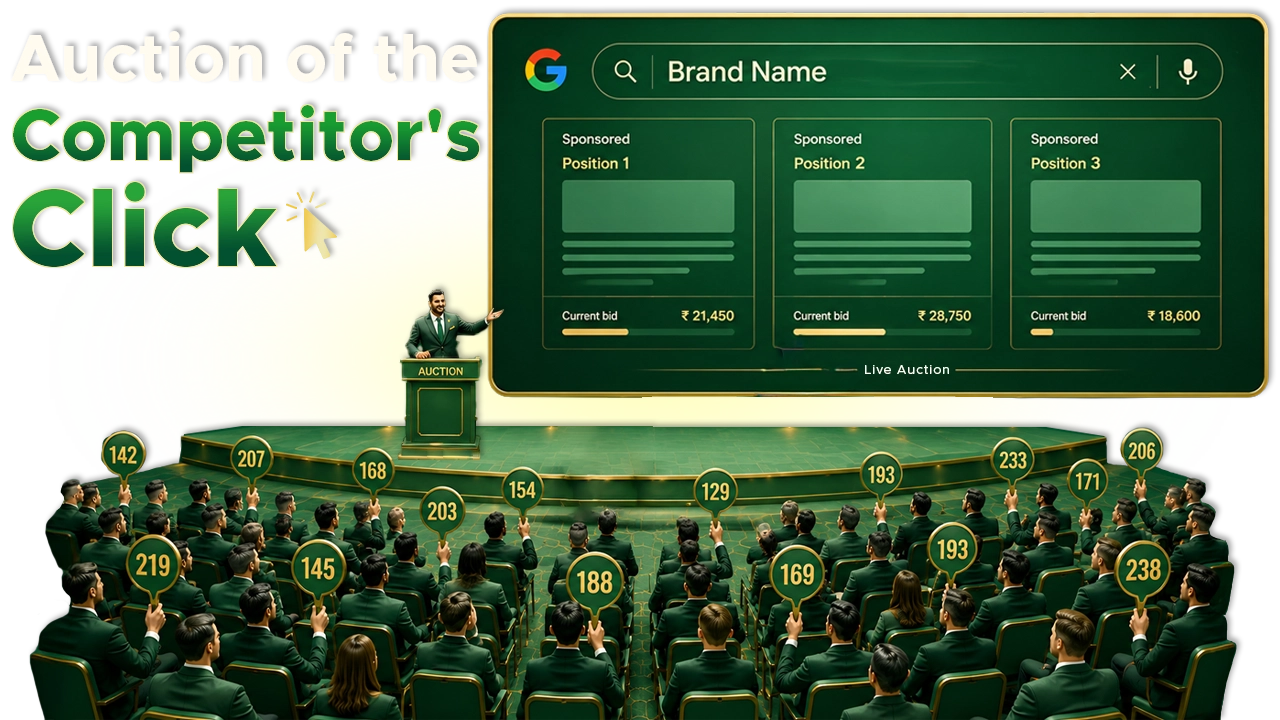
For years, keyword bidding on competitor brand name has been one of the most widely used customer acquisition tactics in performance marketing. Whether labelled competitor targeting, conquest campaigns or brand interception, the objective has remained the same: capture consumers who are actively searching for a rival brand and convert that intent into your own traffic, leads and sales.
The Delhi High Court’s decision in Hindware Ltd. v. Google LLC1 places that strategy under direct legal scrutiny. The judgment addresses a question that sits at the intersection of trademark law and digital advertising architecture: when a platform identifies, recommends, auctions and monetises trademarked search terms, can it still characterise itself as a neutral intermediary? Or does the platform become an active participant in the commercial exploitation of another’s trademark?
That question lies at the heart of what this judgment ultimately examines: whether search advertising platforms are merely facilitating competition, or whether they are enabling businesses to bid on borrowed goodwill?
The Advertising Framework and the Dispute
The dispute arose when Hindware, a leading Indian brand that specializes in sanitaryware and bathroom solutions discovered that competing sanitaryware brands were purchasing the trademark HINDWARE and related keyword combinations through Google’s AdWords programme.
The evidence before the Court showed that Cera Sanitaryware and Grohe had bid on Hindware’s trademark and variations thereof as keywords. Consequently, when consumers searched for Hindware products through Google Search, sponsored advertisements for competing businesses appeared prominently on the Search Engine Results Page (SERP).
The mechanics of the system became central to the litigation.
Google’s AdWords programme enabled advertisers to select keywords that would trigger advertisements in response to user searches. Advertisers could bid for those keywords through Google’s auction-based advertising system. Placement was determined through a combination of bid values and Google’s internal ranking mechanisms, including Quality Score and relevance metrics. The Court’s examination extended beyond the advertisements themselves and into the architecture of the advertising ecosystem. Evidence established that Google’s a Keyword Planner Tool that suggests search terms to performance marketers, conducts keyword auctions in real time, determines the placement of sponsored results, and generates revenue through a Pay-Per-Click model whenever users clicked on advertisements triggered by those keywords.
Google admitted that advertisers could bid on competitors’ trademarks, that Google did not seek permission from trademark owners before making those marks available for bidding, and that searches for one brand could result in advertisements for competing brands being displayed to users.
By the time the matter reached final adjudication, the disputes with the competing advertisers had been settled. The central issue before the Court therefore became whether Google itself could be held liable for the operation of the advertising framework.
Trademark Use Through Keyword Advertising
At first glance, the dispute appeared to concern a narrow question: whether the use of a registered trademark as a keyword amounts to trademark use. The Court’s analysis, however, evolved into a broader inquiry concerning the role of digital platforms in the monetisation of trademark value.
Google argued that keywords function only as invisible backend triggers. Since users never see the keyword itself, Google contended that there was no trademark use in a legally relevant sense. It further argued that advertisers independently select keywords and create advertisements, while Google merely provides the technological infrastructure through which advertisements are displayed. On that basis, Google claimed protection as an intermediary under Section 79 of the Information Technology Act2.
The Court rejected this characterisation. Relying upon People Interactive (I) Pvt. Ltd. v. Gaurav Jerry & Ors.3, as well as international authorities including Interflora Inc. v. Marks & Spencer plc4, L’Oréal SA v. eBay International AG5 and Google France SARL v. Louis Vuitton Malletier SA6, the Court held that the use of a trademark as a keyword constitutes use of the trademark even where the keyword remains invisible to the end user.
Google’s Active Role in the AdWords Ecosystem
Having crossed that threshold, the Court turned to the more consequential question: who was using the trademark?
Google sought to draw a distinction between the advertiser and the platform. According to Google, only the advertiser selected the trademark and therefore only the advertiser could be said to be using it.
The Court declined to accept that distinction.
A substantial portion of the judgment is devoted to examining Google’s advertising architecture. The Court noted that Google did not merely host advertisements. Through its Keyword Planner Tool, Google actively suggested search terms to advertisers. Through its auction system, Google facilitated bidding on trademarked terms. Through its ranking algorithms and Quality Score mechanisms, Google determined how advertisements would be displayed. Through its Pay-Per-Click model, Google earned revenue whenever users clicked advertisements triggered by those keywords.
Viewed collectively, these functions persuaded the Court that Google was not a passive observer of the transaction. It was structuring the transaction.
That finding proved decisive.
The Court held that Google’s role extended beyond providing advertising space. By identifying, recommending, auctioning and monetising trademarked keywords, Google itself participated in the use of the trademark.
Monetisation of Trademark Value and Infringement
The judgment is particularly notable for the manner in which it addresses Google’s competition-based defence.
Google argued that keyword advertising increased consumer choice by presenting alternative products and suppliers. The Court acknowledged the value of competition but held that the legality of competition could not be divorced from the means through which that competition was achieved.
In some of the judgment’s most significant observations, the Court characterised the AdWords framework as a system that converted trademark value into auctionable advertising inventory. The Court noted that trademarked terms were made available to competing advertisers, allocated through bidding mechanisms, and monetised for Google’s commercial benefit without authorisation from the trademark proprietor.
It was in this context that the Court found infringement under Section 29(8) of the Trade Marks Act7.
Rejection of Safe Harbour and Relief Granted
The Court further held that Google could not avail itself of intermediary safe harbour under Section 79 of the Information Technology Act. Since Google’s advertising systems were specifically designed to target users searching for particular trademarks, the Court concluded that Google exercised a level of participation and control inconsistent with the statutory requirements for intermediary immunity.
The Court distinguished earlier decisions such as Google LLC v. DRS Logistics (P) Ltd.8, Google LLC v. MakeMyTrip (India) Pvt. Ltd.9 and Policybazaar Insurance Web Aggregator v. Coverfox Insurance Broking Pvt. Ltd.10, noting that those matters arose in different factual contexts and did not involve the same post-trial evidentiary findings concerning a distinctive and well-known trademark.
Permanent injunctive relief was granted in favour of Hindware. The Court also awarded nominal damages of ₹30 lakh (₹15 lakh in each suit) against Google for trademark infringement. In addition, the Court held that Hindware was entitled to actual litigation costs and directed the plaintiff (Hindware) to file a Bill of Costs for determination in accordance with the Delhi High Court (Original Side) Rules, 2018.
Conclusion
The significance of this ruling extends beyond keyword bidding itself. Historically, disputes in the digital advertising ecosystem have focused on the copy or design of the advertisement that ultimately appears before the consumer. The Delhi High Court’s analysis broadens that inquiry to the systems that enable such advertising in the first place. The judgment therefore signals a willingness to scrutinise the architecture of digital advertising platforms, particularly where trademark value is transformed into commercial opportunity.
In doing so, the Court has made it clear that the goodwill embodied in a trademark is a legally protected commercial asset. Where advertisers seek to capture that value by bidding on another’s reputation, they are not merely competing for visibility; they are competing for consumer intent that is intrinsically linked to the trademark owner. The judgment therefore marks a significant shift in how trademark law views search advertising, drawing a clear line against the auction of the competitor’s click where that click is generated by the goodwill and distinctiveness of another’s mark.
Citations
Expositor(s): Adv. Aparna Shukla,