GST Litigation
Upstream GST Default, ITC Denial and Section 74: Safecon after Bhandari Scrap Traders
On this page
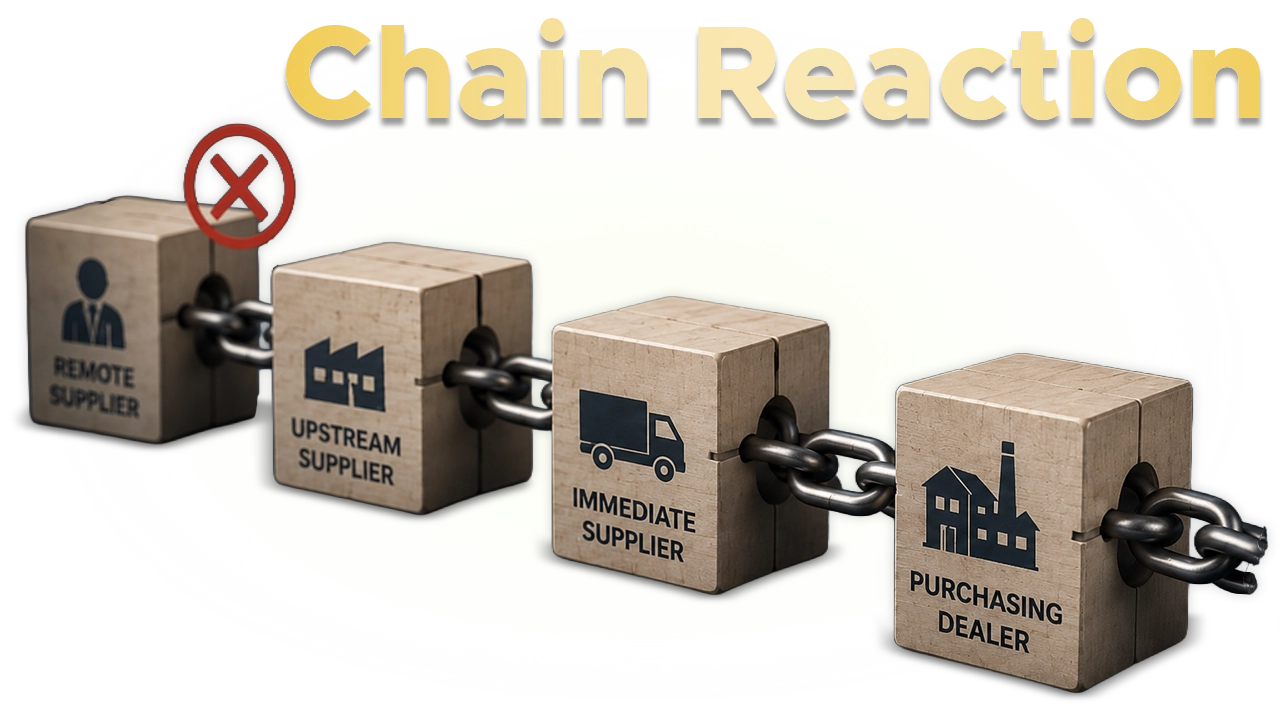
A purchasing dealer receives the goods, pays the entire invoice value through banking channels and retains the tax invoice, e-way bill and transport documents. The transaction appears in the GST returns of both the purchaser and its immediate supplier. The supplier also discharges the tax disclosed in its return.
The Department subsequently discovers that an entity situated further upstream in the supply chain did not deposit tax or was not conducting genuine business. Can that default travel through every subsequent transaction and extinguish the purchasing dealer’s input tax credit? More importantly, can the Department invoke the fraud machinery under Section 74 of the Central Goods and Services Tax Act, 2017 against the purchaser without establishing its knowledge, participation or collusion?
These questions were placed in sharp focus by the Allahabad High Court in M/s Safecon Lifescience Private Limited v. Additional Commissioner Grade 2 and Another1. Safecon had purchased pharmaceutical products from Unimax Pharma Chem. The transaction was supported by an invoice, e-way bill, transport bill, banking-channel payment and return disclosures. The immediate supplier had filed GSTR-1 and GSTR-3B. The Department nevertheless denied ITC because the supplier had allegedly purchased goods from other firms that had not deposited tax.
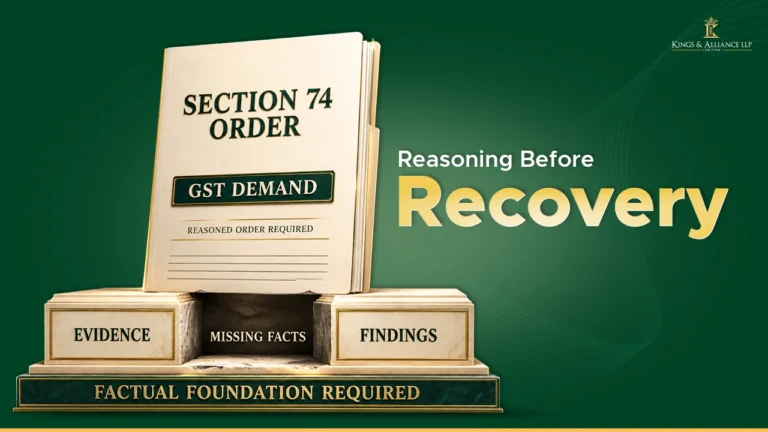
The High Court quashed the proceedings. It found that the evidence establishing movement of goods, payment and return disclosure had not been rebutted. There was no finding that Safecon’s immediate supplier was involved in any irregularity, much less that Safecon had committed fraud, made a wilful misstatement or suppressed facts with intent to evade tax. Information received from another departmental wing, the Court held, could not be acted upon without verification or disclosure to the taxpayer.
On 17 July 2026, the Supreme Court dismissed the Revenue’s special leave petition, observing that it found no good ground to entertain it. The brief order does not independently convert every observation of the High Court into law declared under Article 141. It does, however, leave the High Court’s decision undisturbed and final between the parties.
The significance of Safecon lies not in creating immunity for every purchasing dealer, but in identifying the point at which an investigation into upstream fraud must be connected back to the taxpayer whose ITC is sought to be denied.
The Statutory Boundary of ITC Liability
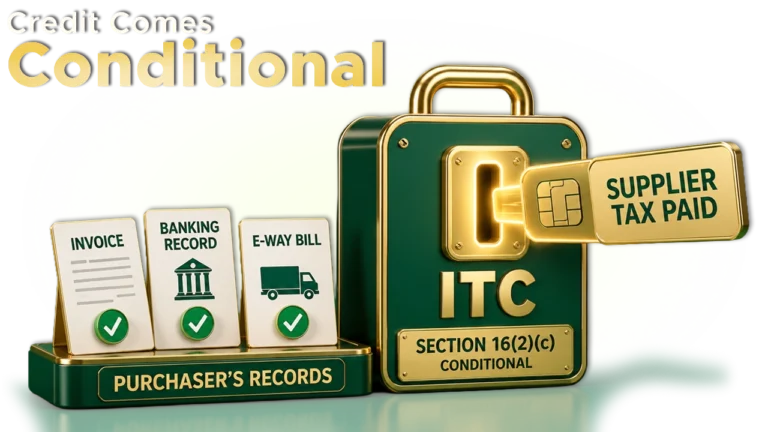
Section 16(2)(c) provides that ITC is available only where the tax charged “in respect of such supply” has actually been paid to the Government. Section 41(2) similarly requires reversal where tax payable on the relevant supplies has not been paid by “the supplier”, while permitting re-availment once that supplier makes the payment.
The statutory language connects ITC eligibility to a particular supply made to the recipient. It does not expressly require the recipient to establish that tax has been deposited at every preceding stage through which the goods may have travelled.
This distinction became critical in Safecon. The allegation was not that the tax charged by Safecon’s immediate supplier on the supply to Safecon had remained unpaid. The case against Safecon was built upon alleged irregularities in purchases made by that supplier from other entities. The Department therefore attempted to transmit suspicion arising at an antecedent stage directly to the downstream purchaser.
The High Court refused to accept that approach in the absence of evidence connecting Safecon to the alleged irregularity. It noted that the purchaser had produced material relating to its own transaction, that the direct supplier’s return reflected the supply and tax payment, and that the Department had not rebutted the evidence of actual movement of goods.
One week after the Safecon order, the Supreme Court considered a materially different situation in Bhandari Scrap Traders v. Union of India2. The challenge arose from the Gujarat High Court’s judgment in Maruti Enterprise v. Union of India3, which upheld the constitutional validity of Section 16(2)(c).
The Gujarat High Court held that payment of tax by the supplier is an indispensable statutory condition. Where the supplier fails to remit the tax charged on the supply made to the purchasing dealer, the recipient must reverse the credit and may re-avail it after the supplier discharges the liability. The Court rejected the argument that Section 16(2)(c) should be read down to protect every bona fide purchaser from its supplier’s default.[6]
On 24 July 2026, the Supreme Court expressly agreed with the Gujarat High Court. It distinguished the GST framework from the Delhi VAT regime, relied upon Sections 41, 73 and 74, and upheld the conclusion that Section 16(2)(c) was neither unconstitutional nor liable to be read down.
Safecon and Bhandari Scrap Traders are therefore not competing answers to the same factual problem.
In Bhandari Scrap Traders, the condition attached to the purchaser’s own supply had failed because the immediate supplier had not paid the relevant tax. In Safecon, the purchasing dealer demonstrated the genuineness of its direct transaction and payment by the immediate supplier, while the alleged default arose further upstream.
The resulting legal boundary is narrow but significant. Section 16(2)(c) permits the Department to verify whether tax charged on the supply made to the recipient reached the Government. It does not, without further evidence, transform the recipient into the guarantor of tax compliance by every remote entity in the supply chain.
That does not mean invoices and banking payments will always be sufficient. Section 155 places the burden of proving ITC eligibility upon the claimant. In State of Karnataka v. Ecom Gill Coffee Trading Private Limited4, the Supreme Court held, under the Karnataka VAT legislation, that invoices and cheque payments alone did not prove genuine purchases. The dealer was required to establish the actual movement and receipt of goods through evidence such as seller particulars, vehicle details, freight payments and delivery acknowledgements.
Ecom Gill prevents Safecon from becoming a documentary safe harbour for paper transactions. A purchasing dealer must still prove the commercial reality of its own supply. Its evidence may include the purchase order, tax invoice, e-way bill, lorry receipt, delivery records, inventory entry, banking payment, corresponding outward supply and GST return reconciliation.
Once that burden is discharged, however, the Department cannot reject the entire record merely by pointing to a doubtful entity elsewhere in the chain. It must establish how that irregularity affected the particular supply on which ITC was claimed or how the purchaser participated in, knew of or benefited from the fraudulent arrangement.
The distinction becomes even more important where Section 74 is invoked. Wrongful ITC and fraudulent ITC are not synonymous. Section 74, for periods up to Financial Year 2023-24, requires the credit to have been wrongly availed or utilised by reason of fraud, wilful misstatement or suppression of facts with intent to evade tax.
A failure of an eligibility condition may justify reversal under the applicable statutory mechanism. It does not automatically establish fraud by the recipient. To invoke Section 74, the notice and the adjudication order must identify taxpayer-specific material showing the recipient’s deliberate involvement. Suspicion against a supplier, retrospective cancellation of registration or an upstream intelligence report cannot substitute for that finding.
Conclusion
Revenue may investigate a supply chain as far backwards as the evidence reasonably requires. Fake invoicing networks frequently operate through multiple entities, and confining an investigation to the immediate supplier could allow organised credit fraud to remain concealed.
Liability, however, cannot travel downstream merely because suspicion travels upstream.
After Bhandari Scrap Traders, a purchaser cannot claim ITC where the tax charged by its immediate supplier on the relevant supply has not been deposited, even if the purchaser acted bona fide. Section 16(2)(c) remains a mandatory condition, subject to reversal and subsequent re-availment under Section 41.
At the same time, Safecon indicates that a default committed by a remote supplier cannot mechanically invalidate every subsequent ITC claim. Where the purchasing dealer proves actual receipt of goods, commercial payment, return disclosure and payment of the tax relating to its direct supply, the Department must establish a specific evidentiary link before fastening an upstream irregularity upon it.
The emerging position rests upon two distinct propositions: ITC eligibility is transaction-specific, while an allegation of fraud must be taxpayer-specific. The purchaser must prove its transaction. Revenue must prove the purchaser’s connection with the alleged fraud.
Citation
- M/s Safecon Lifescience Private Limited v. Additional Commissioner Grade 2 and Another, Writ Tax No. 389 of 2023, Allahabad High Court ↩︎
- Bhandari Scrap Traders v. Union of India & Ors., SLP (C) Nos. 23931, 24088 and 24103 of 2026, Supreme Court ↩︎
- Maruti Enterprise through its Authorised Partner Jigneshbhai Bharatbhai Tarpara v. Union of India & Ors., R/Special Civil Application No. 18080 of 2023 and connected matters, Gujarat High Court ↩︎
- State of Karnataka v. Ecom Gill Coffee Trading Private Limited, Civil Appeal Nos. 230 to 232 and 216 to 217 of 2023, Supreme Court ↩︎
Expositor(s): Adv. Jahnobi Paul
This article is for information only and is not legal advice. Read the disclaimer