Delhi High Court · IPR Laws
Delhi High Court on Well-Known Mark Protection under Section 11(2) in ZARA v. ZORA
On this page
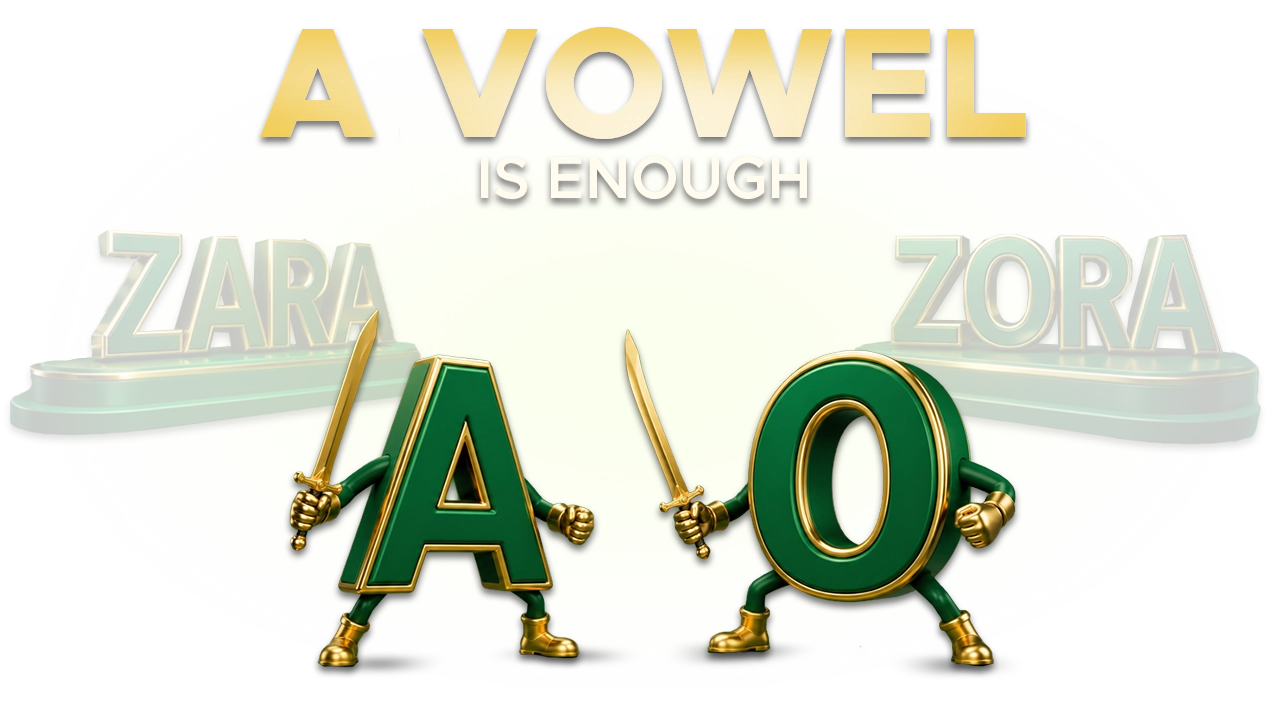
Sometimes, a trademark dispute turns on a single letter. Here, it was the difference between “A” and “O”. ZARA was already registered, widely used and judicially recognised. Yet the Trade Marks Registry permitted ZORA to proceed to registration in Class 24 for fabrics. The Registrar treated the marks as distinct because “ZA” and “ZO” sounded different and because the parties appeared to operate through different trade channels. That reasoning brought the dispute before the Delhi High Court in Industria De Diseno Textil, S.A. v. Registrar of Trade Marks & Anr.1 The appeal required the Court to consider not merely whether ZARA and ZORA looked or sounded alike, but how a well-known mark is protected under Section 11(2) of the Trade Marks Act, 1999. It also raised a broader question: must a mark first be formally declared well known before it can receive protection against a later, similar mark?
Anti-Dissection, Well-Known Mark Protection and Dilution under Section 11(2)
The Registrar had compared the marks by separating their components. Since both ended in “RA”, the analysis shifted to the prefixes “ZA” and “ZO”. On that basis, the Registrar found the marks visually and phonetically dissimilar. The High Court rejected that method. Trademark comparison does not proceed by dividing marks into isolated syllables and examining individual differences. The marks must be assessed as wholes, through the perspective of a person of average intelligence and imperfect recollection. This reflected the anti-dissection principle recognised by the Supreme Court in Corn Products Refining Co. v. Shangrila Food Products Ltd.2 Viewed as wholes, ZARA and ZORA shared the same length, opening letter, ending and overall structure. Both were four-letter marks beginning with “Z” and ending in “RA”. The replacement of one vowel did not sufficiently alter their total visual or phonetic impression. The Court therefore held that the marks were deceptively similar. That finding was only the first step. The more significant issue concerned the reach of Section 11(2).
The respondent argued that ZARA could not invoke the protection available to a well-known mark because it had not been formally declared as such or entered in the Registrar’s list. The Court rejected this contention. Section 11(2), read with Explanation (b), protects an earlier trademark that was entitled to protection as a well-known mark on the relevant date. The statute does not make a prior formal declaration a condition precedent. The inquiry is therefore substantive rather than merely administrative. A proprietor may establish well-known status in opposition proceedings through evidence of public recognition, duration and geographical extent of use, promotion, registrations and successful enforcement.
In assessing ZARA’s claim, the Court considered its Indian and international use, registrations, retail presence, sales, advertising and earlier judicial recognition. In Industria De Diseno Textil S.A. v. Oriental Cuisines Pvt. Ltd. & Ors.3, the Delhi High Court had already recognised ZARA’s substantial reputation and protected it against use in relation to restaurant and hospitality services. On the material before it, the Court held that ZARA was entitled to protection as a well-known mark. The Registrar had also relied on the absence of actual confusion and on differences between the parties’ goods and consumers. ZORA was used for polyester fabric supplied to bag manufacturers, while ZARA was associated with finished fashion, home and lifestyle products.
The High Court held that this reasoning overlooked the purpose of Section 11(2). Unlike Section 11(1), which principally addresses likelihood of confusion in relation to identical or similar goods or services, Section 11(2) protects a well-known mark against unfair advantage and detriment even where the later mark is used for dissimilar goods. The question was therefore not limited to whether a retail consumer would mistake ZORA fabric for a ZARA product. The Court had to consider whether the later mark would draw upon ZARA’s reputation or weaken its ability to signify a single commercial source. Actual confusion was not indispensable to that inquiry.
The Court also found that the goods were not wholly disconnected. ZARA’s business extended to clothing, bags, textiles and home products, while ZORA was used for fabric supplied within the same broader commercial chain. Even so, the Court made clear that dissimilarity of goods would not, by itself, defeat an objection under Section 11(2).
Conclusion
The Delhi High Court set aside the Registrar’s order, cancelled the registration of ZORA in Class 24 and directed rectification of the Register. The significance of the decision extends beyond the similarity between two short words. It clarifies that well-known status may be established through evidence in opposition proceedings and does not depend exclusively on prior formal listing. It also reinforces that marks must be compared as wholes and that Section 11(2) is concerned with dilution, unfair advantage and detriment, not merely proof of actual confusion. The dispute began with one altered vowel. It ended with a broader reaffirmation of the protection available to marks whose reputation extends beyond the goods for which they are immediately known.
- Industria De Diseno Textil, S.A. v. Registrar of Trade Marks & Anr., C.A.(COMM.IPD-TM) 52/2024, decided on 6 July 2026 by the Delhi High Court. ↩︎
- Corn Products Refining Co. v. Shangrila Food Products Ltd., 1959 SCC OnLine SC 11roducts Refining Co. v. Shangrila Food Products Ltd ↩︎
- Industria De Diseno Textil S.A. v. Oriental Cuisines Pvt. Ltd. & Ors., 2015 SCC OnLine Del 9565. ↩︎
Expositor(s): Adv. Aparna Shukla
This article is for information only and is not legal advice. Read the disclaimer