Introduction
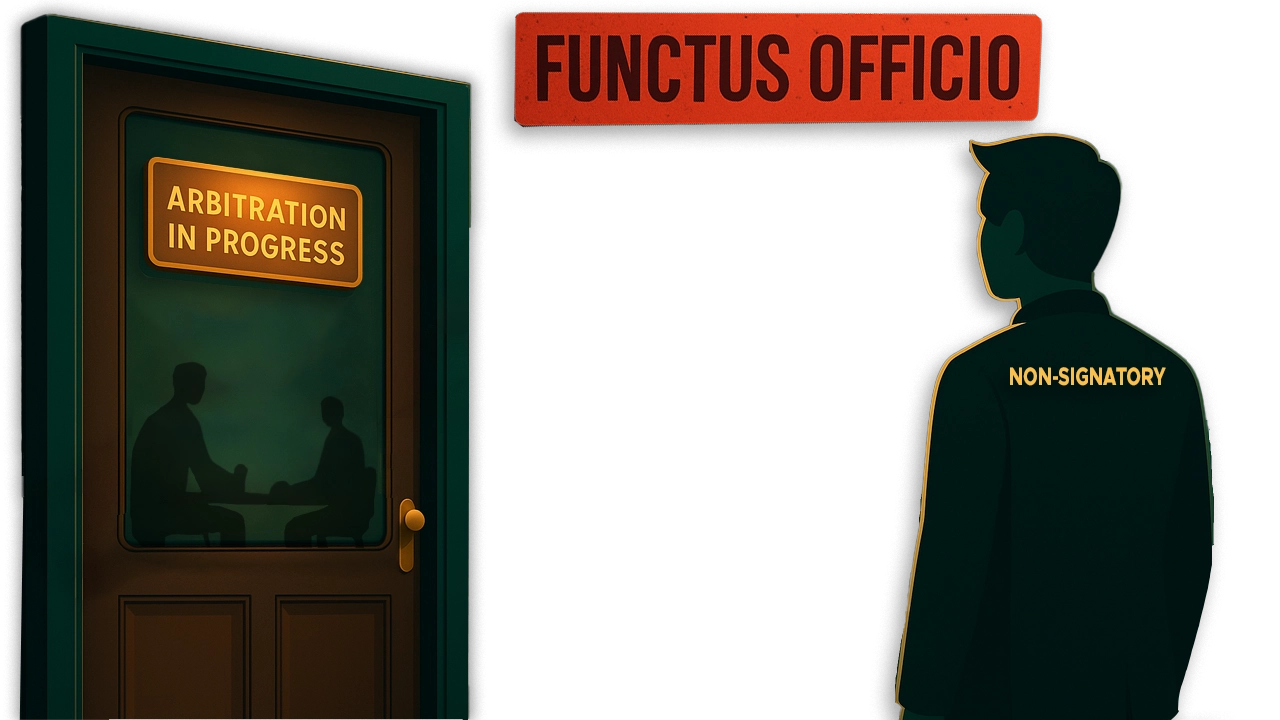
Can a criminal complaint for the dishonor of a cheque be sustained if the person filing it lacks a formal, corporate authorisation at the inception of the case? This central question lies at the heart of the legal battle in M/S Amprolisa Construction and Marketing Pvt Ltd vs. Gupta Hardware Private Limited and Anr1, a case before the Gauhati High Court presided over by the Hon’ble Mr. Justice Sanjeev Kumar Sharma that tests the limits of procedural rectitude versus substantive justice. The matter primarily revolves around whether a deficiency in the authorisation of a company’s representative specifically the absence of a Board Resolution or a valid Power of Attorney at the time of filing constitutes a “curable defect” or a fatal flaw that necessitates the quashing of criminal proceedings under Section 138 of the Negotiable Instruments (NI) Act.
The dispute began on August 26, 2015, when the learned Judicial Magistrate at Kamrup (Metro) took cognizance of a complaint filed by Manab Lahkar, appearing as the Marketing Manager for Gupta Hardware Pvt. Ltd., alleging the dishonor of a cheque. After the completion of prosecution evidence and the closure of defense evidence, a significant procedural shift occurred on July 18, 2019. The complainant moved a petition to adduce additional evidence to introduce a Board Resolution and a Power of Attorney, which the Trial Court allowed on December 7, 2019, by invoking Section 311 of the Cr.PC (now, Section 348 of the BNSS). Subsequently, on July 30, 2022, the complainant furnished this additional evidence on affidavit while the matter was pending for cross-examination. This prompted the petitioner to approach the High Court seeking to quash the proceedings, arguing that these documents were created after the case’s institution and represented an illegal attempt to fill a foundational lacuna in the prosecution’s case.
Corporate Authority: Mandatory or Curable?
The legal rationale driving this case hinges on the juristic nature of a company. As established in Dale & Carrington Invt. (P) Ltd. vs. P. K. Prathapan2, a company is a legal entity that can only act through its Board of Directors. Consequently, an individual Director or employee has no inherent power to act on the company’s behalf unless specifically authorised by a Board Resolution. The petitioner leaned heavily on A.C. Narayanan vs. State of Maharashtra3, where the Supreme Court held that a Magistrate wrongly takes cognizance if there is no mention or perusal of a Power of Attorney authorising the complainant. Furthermore, in State Bank of Travancore vs. M/S Kingston Computers (I) Private Ltd.4, the Apex Court underscored that a letter of authority issued by an executive without a supporting Board Resolution delegating such power is nothing more than a “scrap of paper”.
However, the counter-narrative suggests a more flexible approach to these “technicalities.” The Karnataka High Court in George Joseph vs. HMT (International) Ltd.5 acknowledged that while the lack of authority is an infirmity, it is one that should be cured rather than ignored or used to immediately vitiate proceedings. This aligns with the principle that such authority can be supplied or ratified even at a later stage, including during appellate proceedings. The Gauhati High Court itself, in Debson Pumps Pvt. Ltd. vs. Gauhati Municipal Corporation6, referenced the view that dismissing a complaint at the threshold for failing to produce a Board Resolution is often “too hasty an action”. The rationale here is that while the law requires corporate affairs to be conducted with formality, the primary objective of the NI Act should not be defeated by procedural oversights if they do not cause irreparable prejudice to the defense.
Conclusion
This case highlights the delicate balance between ensuring strict compliance with corporate law and preventing the evasion of liability in financial transactions. While the petitioner argues that the late introduction of authorisation documents is an impermissible “filling of lacunae,” the weight of evolving jurisprudence suggests that the court’s power under Section 311 of the Cr.PC is intended to reach the truth. If a representative has an “implied authorisation” that is later formally ratified, the courts are increasingly hesitant to quash proceedings on a purely technical basis. Ultimately, the court must determine if the initial lack of a resolution was a fundamental absence of right or merely a procedural delay in documenting an existing authority.
Citations
Expositor(s): Adv. Aparna Shukla