IPR Laws
Analysing Prior User Rights and the First-in-the-Market Rule in the Context of NOKUF Dispute in Sana Herbals
On this page
Introduction
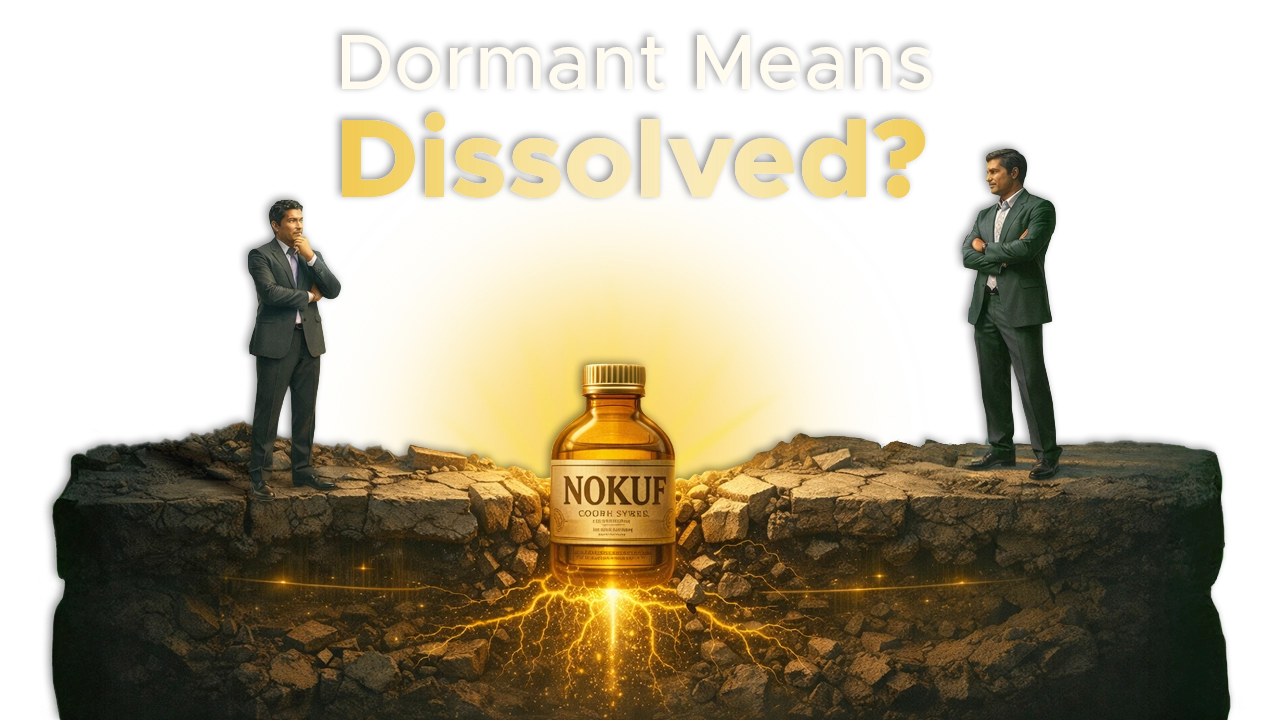
Can a party that has built substantial goodwill through decades of continuous trademark use be prevented from seeking an injunction against a prior user who has returned to the market after a twenty-five-year hiatus? This central question highlights the tension between equitable longevity and the rigid “first in the market” rule in Indian trademark law. In the landmark judgment of Sana Herbals Private Limited vs. Mohsin Dehlvi & Anr1. pronounced on January 5, 2026, a Division Bench of the Delhi High Court comprising Justice C. Hari Shankar and Justice Om Prakash Shukla mentioned that while a plaintiff’s claim may be grounded in equity due to long-standing use, it remains legally “unsound” if the defendant can prove prior usage. The court held that the respondents, having used the “NOKUF” mark as early as 1994, well before the appellant’s very incorporation retained a superior right that could not be overridden by the appellant’s subsequent registration or market success, thereby affirming that the common law remedy of passing off is anchored fundamentally in the timeline of first use rather than the volume of later sales.
The factual matrix of this dispute spans over thirty years, beginning on October 20, 1994, when the respondents first commenced use of the “NOKUF” mark for medicinal syrups. This was followed by a formal trademark application on June 3, 1996. The appellant, Sana Herbals Private Limited, did not come into existence until its incorporation on October 21, 1997. Relationships between the parties were initially collaborative, evidenced by a Manufacturing Agreement dated November 3, 1997, where the respondents permitted the appellant to manufacture “NOKUF” for a limited period. However, the trajectory diverged following a fire at the respondents’ unit in 2003 and the subsequent striking off of the respondent company from the Register of Companies in 2007. During this period of the respondents’ dormancy, the appellant applied for “NOKUFSYRUP” on May 15, 2015, obtaining registration in 2020. The conflict reached a head when the respondents’ original 1996 application was finally granted registration on September 22, 2020, leading to a clash of two registered proprietors where the appellant sought to restrain the respondents’ re-entry into the market.
To further contextualize the Sana Herbals ruling, it is essential to look at the broader judicial landscape regarding “prior use” and the survival of trademark rights during dormancy. A cornerstone of this jurisprudence is the Supreme Court’s decision in S. Syed Mohideen v. P. Sulochana Bai (2015)2, which established that the common law rights of a prior user are superior to the statutory rights of a registered proprietor; the court clarified that registration does not provide an absolute defense against a passing off action initiated by the original adopter. This “first in the market” supremacy was similarly echoed in Satyam Infoway Ltd. v. Sifynet Solutions Pvt. Ltd. (2004)3, where the court held that the person who first creates a reputation through the use of a mark whether in physical goods or digital domains is the one the law seeks to protect.
The specific issue of a long hiatus, such as the respondents’ twenty-five-year gap, is addressed by the “intent to abandon” doctrine found in Hardie Trading Ltd v. Addisons Paint & Chemicals Ltd (2003)4. In that case, the Supreme Court ruled that mere non-use does not equate to the legal abandonment of a trademark if that non-use is dictated by “special circumstances” rather than a voluntary intent to relinquish the brand. This aligns with the reasoning in Laxmikant V. Patel v. Chetanbhat Shah (2002)5, where the court emphasized that the primary goal of passing off law is to prevent a later entrant from “usurping” the identity of another, ensuring that the original pioneer is not penalized for periods of industrial eclipse or misfortune. Finally, while cases like Neon Laboratories Ltd v. Medical Technologies Ltd (2015)6 allow a later-registered party to be restrained if they have never actually entered the market, the Sana Herbals bench used this very logic to protect the respondents, confirming that since they had a documented “user” history starting in 1994, they remained the rightful “first in the market” despite their subsequent period of dormancy.
Conclusion
The court affirmed the denial of the interim injunction, prioritizing the historical priority of the respondents over the appellant’s modern commercial dominance. The judgment serves as a definitive statement that in the realm of passing off, the law protects the original adopter of a mark even if they suffer a period of industrial eclipse, provided their initial use predates their opponent. By maintaining the sanctity of the “prior user” status, the court ensured that a licensee or a later entrant cannot use a period of the original owner’s misfortune to permanently usurp the rights to a brand. The narrative ends with the realization that in trademark jurisprudence, while equity may favor the industrious, the law steadfastly protects the pioneer.
Citations
- Sana Herbals Private Limited v. Mohsin Dehlvi & Anr., FAO (COMM) 77/2025 ↩︎
- S. Syed Mohideen v. P. Sulochana Bai (2015) 2 SCC 683 ↩︎
- Satyam Infoway Ltd. v. Sifynet Solutions Pvt. Ltd. (2004) 6 SCC 145 ↩︎
- Hardie Trading Ltd v. Addisons Paint & Chemicals Ltd (2003) 11 SCC 92 ↩︎
- Laxmikant V. Patel v. Chetanbhat Shah (2002) 3 SCC 65 ↩︎
- Neon Laboratories Ltd v. Medical Technologies Ltd (2015) 2 SCC 672 ↩︎
Expositor(s): Adv. Aparna Shukla
This article is for information only and is not legal advice. Read the disclaimer