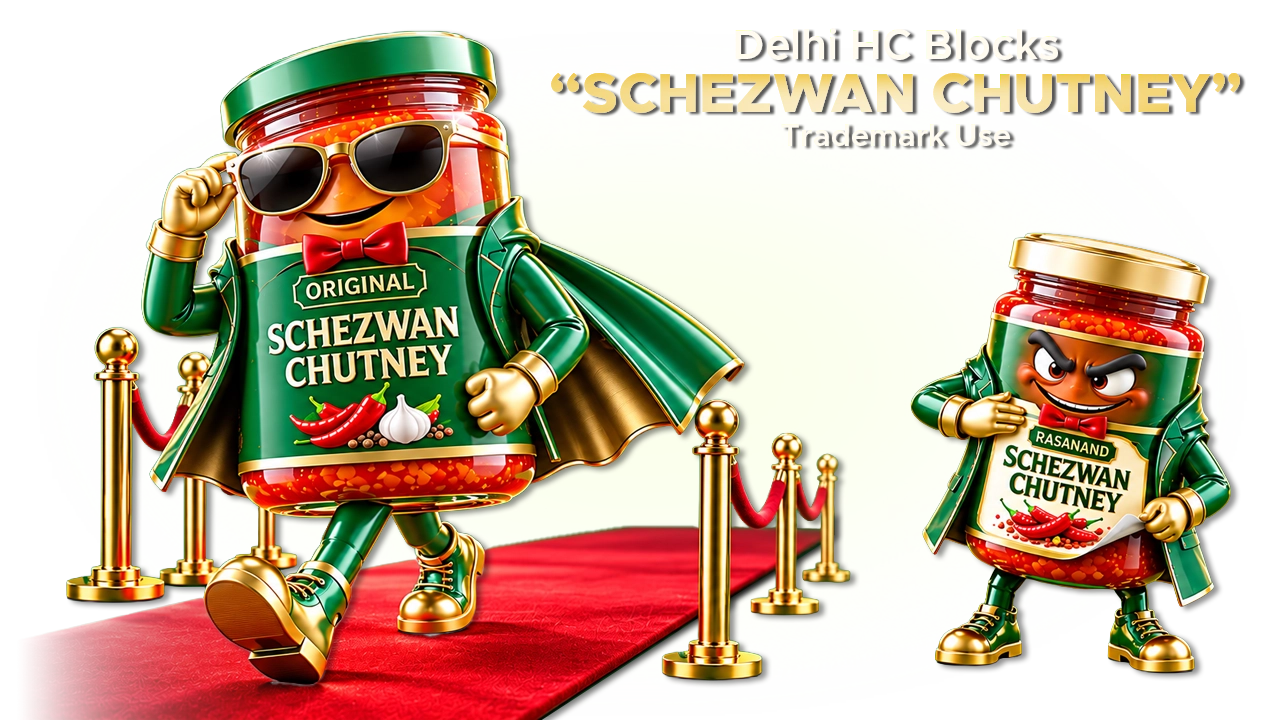
Can descriptive and generic culinary terms acquire secondary meaning over time and receive judicial protection against “smart copying”? The Delhi High Court answered yes in Capital Foods Pvt. Ltd v. Patson Foods (India) Pvt Ltd.1(order dated 25 August 2026) restraining competitors from using “ Schezwan Chutney” as the dominant feature on condiment packaging. In 1996, Capital Foods launched a bold culinary experiment which fused the fiery, pungent garlic and chilli flavours of China’s Sichuan province with the comforting everyday habit of the Indian kitchen which is the chutney. Marketed under the flagship brand Ching’s Secret, this hybrid birthed an entirely new phenomenon fondly embraced by millions as “Desi Chinese”.
In the year 2012, Capital Foods formalized this fusion into a single proprietary name which is “Schezwan Chutney” supported by massive celebrity endorsements campaigns featuring Ranveer Singh as its brand ambassador. Meanwhile MCA(Ministry of Corporate Affairs) show the defendants operate under the Patson group with shared leadership , jointly manufacturing and distributing “RASANND SCHEZWAN CHUTNEY” offline and online nationwide,including Delhi. After detecting this infringement in November 2025, Capital Foods issued a legal notice on November 18,2025 to which Patson Food agreed to discontinue the product and pledged not to manufacture or sell identical or deceptively similar marks.
However by March 2026 the plaintiff detected that Patson Foods had covertly resumed sales of the infringing product through its website. Despite a subsequent cease and desist letter dated March 10,2026 Patson Foods failed to respond and continued its infringing commercial activities. To secure concrete proof a Capital Foods investigator placed a website order in July 2026 which was delivered to a Delhi address on July 31st 2026, accompanied by an official tax invoice.
Issue One : Trademark Infringement and Likelihood of confusion
The primary issue is the use of “RASANAND SCHEZWAN CHUTNEY” by Patson Foods creates confusion among customers of average intelligence. The court is tasked with evaluating whether prefixing a house brand “Rasanand” adequately distinguishes the product when the target audience and nature of the product is the same.
Issue Two : Descriptiveness v. Secondary Significance
The issue relies on “SCHEZWAN CHUTNEY” remaining a descriptive term available for a general trade use of Capital Foods investment marked by high sales, celebrity endorsements and media presence which has established a secondary meaning exclusively to its brand. This builds on prior precedents of Capital Foods Pvt. Ltd. v. Radiant Indus Chem Pvt. Ltd.2 noted that the trademark SCHEZWAN CHUTNEY of Plaintiff has acquired secondary significance .
Issue Three : Breach Of Undertaking and Malafide Conduct
The proceedings address the allegations of bad faith regarding the defendant’s conduct. After providing an e-mail undertaking in 2025 promising to cease using the mark, subsequent test purchases in 2026 revealed that impunged products remain available through digital channels.
Issue Four : Passing Off and Misrepresentation
Assessing whether the visual presentation and overall trade dress allow the defendants to pass off their goods as those of the plaintiff. The Court concluded that the defendants adoption of the mark and trade presentation constitutes passing off causing irreparable harm to the plaintiff’s brand equity.
Factual Submissions By The Parties
The plaintiff Capital Foods contended that its mark “SCHEZWAN CHUTNEY” is a rare , coined and cross-lingual combination conceived in 2012 that has acquired a strong secondary significance through over a decade of continuous commercial use, multi-crore sales and high profile marketing campaigns featuring prominent celebrities. Grounding its case on both statutory and common law rights, the plaintiff highlighted its valid wordmark registration in Class 30 copyright protection over the distinctive visual packaging and prior judicial recognition of the marks distinctiveness. Consequently, the plaintiff argued that the defendant’s adoption of an identical mark for identical goods constitutes direct trademark infringement under Section 29 of the Trademarks Act 19993 and common law passing off.
Crucially the plaintiff argued that prefixing a small mark “Rasanand” fails to eliminate consumer confusion that while pointing to the defendants malafide intent in breaching a prior cease and desist undertaking to covertly resume online sales. Because the proceeding pertained to an ex-parte ad-interim injunction under Order XXXIX Rule 1 and 2 CPC4 no counsel appeared on the behalf of the Patson Foods and consequently no arguments were advanced.
The Court’s Reasoning
A single judge bench of Justice Jyoti Singh granted urgent interim relief after capital foods satisfied all three prerequisites which is establishing a prima facie case showing the balance of convenience favoured restraint and demonstrating irreparable harm grounding its decision Capital Foods valid registration for “SCHEZWAN CHUTNEY” wordmark and packaging which are backed over by a decade and continuous commercial use and multi-crore promotions, while explicitly ruling that the defendants use of an identical mark for identical goods with the house brand “Rasanand” prefixed in small font failed to prevent consumer confusion trademark infringement and passing off.
Furthermore, the court severely censured the Patson Foods bad faith conduct noting that they have previously acknowledged the Plaintiff’s proprietary rights and issued a cease and desist undertaking yet deliberately breached it to pass off goods for unlawful monetary gain. Consequently the ex-parte ad-interim injunction, as prayed for, was granted. The court also restrained Patson Foods from manufacturing, marketing or selling products under the mark “RASANAND SCHEZWAN CHUTNEY” or any mark deceptively similar to the Plaintiff’s registered trademark until the next date of hearing.
Jurisprudential Implications
This order reinforces two jurisprudential principles:secondary significance and bad faith adoption. It affirms that terms like “Schezwan” and “Chutney” earn legal protection through continuous promotion when consumers strongly associate them with a single origin while adding a brand like “Rasanad” fails to cure infringement and cause public confusion.
Equally critical is the court’s stance on interim relief and deliberate breach of undertaking. Resuming sales after agreeing to cease proved mala fide intent to exploit the plaintiffs goodwill.
Conclusion
The Delhi High Court’s ruling in Capital Foods v. Patson Foods establishes that the continuous commercial dominance and heavy marketing can transform deceptive culinary terms like “SCHEZWAN CHUTNEY” into legally protected brand identifiers.By looking beyond cosmetic labels and tweaks , the court affirmed that market pioneers can successfully defend acquired meaning against “smart copying”. The decision strikes a crucial balance:while generic culinary vocabulary remains free for honest descriptive use, copying an innovator’s distinctive word combination and trade dress constitutes unlawful passing off. Ultimately, this precedent strengthens brand protection across physical and e-commerce markets , ensuring commercial success relies on genuine innovation rather than deceptive imitation.
Citations
Expositor(s): Adv. Gaurangi Tandon