IBC · NCLAT Judgement
Can a Successful Bidder in an IBC Liquidation Sale Seek Reliefs Beyond “As Is Where Is” Terms?
On this page
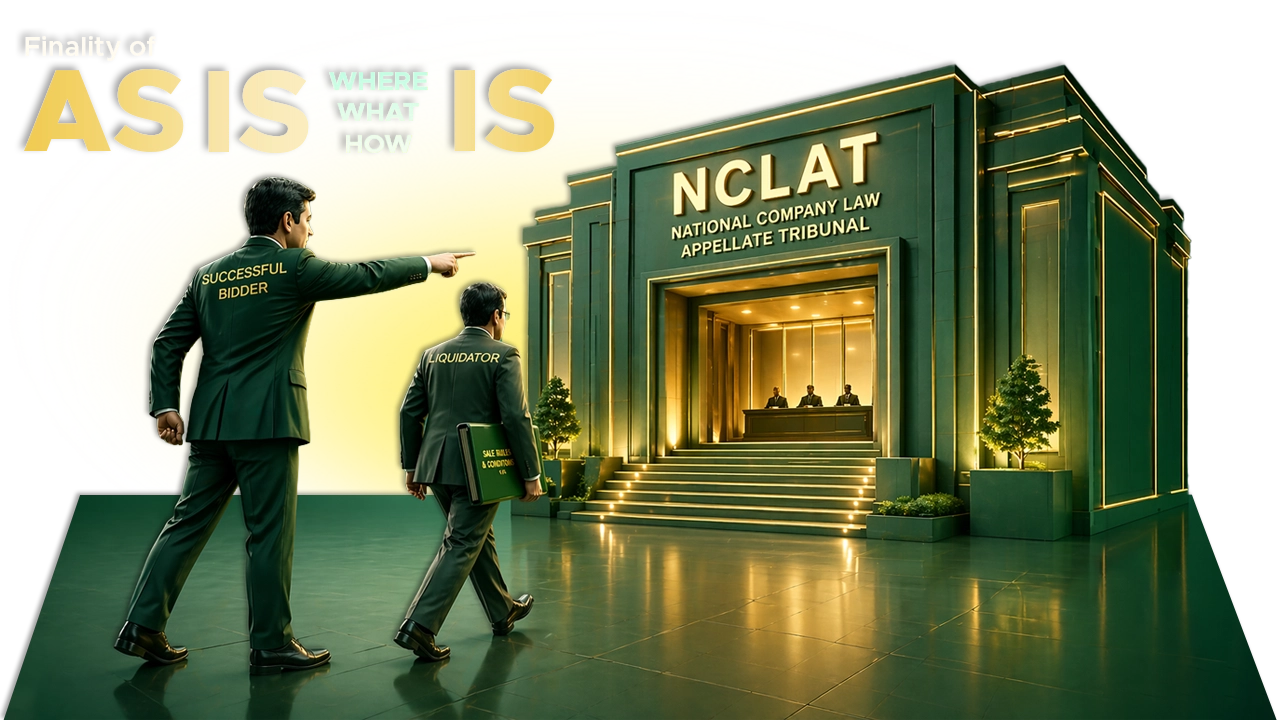
Could the successful bidder in a liquidation sale, having accepted assets on an “as is where is” basis, later seek judicial intervention to secure extensive reliefs and concessions not stipulated in the original auction notice? On April 2, 2026, the National Company Law Appellate Tribunal (NCLAT), Chennai Bench, in Biotech Pvt. Ltd. v. Dr. Kondapalli Venkat Srinivas (Liquidator)1, has answered this in the negative, stating that such requests are barred by the doctrine of caveat emptor and the procedural rigors of constructive res judicata. The Tribunal clarified that once a bidder participates in an auction with full knowledge of its “no recourse” terms, they cannot later utilize the Liquidator to bypass previous judicial dismissals or to rewrite the commercial terms of the sale.
The dispute originated from the sale of Veda Biofuel Limited as a going concern. Biotech Pvt. Ltd. was declared the successful bidder following an e-auction conducted on September 16, 2024. Although the bidder initially moved the National Company Law Tribunal (NCLT) for various reliefs and concessions, that application was withdrawn unconditionally on November 8, 2024, without liberty to refile. Subsequently, the Liquidator filed a fresh application2 under Section 35 and 60(5) of the IBC, seeking not only to report the completion of the sale but also to grant 41 specific concessions to the bidder including tax waivers, discharge of past liabilities, and electricity due clearances. The NCLT rejected this application, leading to the present appeal before the NCLAT.
In upholding the NCLT’s rejection, the Appellate Tribunal grounded its rationale in the strict contractual nature of auction sales. It observed that the auction notice dated August 21, 2024, explicitly stated the sale was on an “as is where is,” “as is what is,” and “whatever there is” basis. By participating, the bidder entered a “deeming presumption” of having accepted these terms, creating an estoppel against any future claims for additional concessions. The NCLAT heavily relied on the Supreme Court’s precedent in KC Ninan v. Kerala State Electricity Board & Others3, which established that “as is where is” clauses put all prospective purchasers on notice regarding pending statutory dues and encumbrances. Under the doctrine of caveat emptor (buyer beware), the purchaser has a duty of due diligence to discover patent defects, and the seller is under no obligation to disclose issues that a prudent buyer could have identified through reasonable enquiry.
Furthermore, the Tribunal addressed the procedural impropriety of the Liquidator’s application. Because the bidder’s own prior application for the same reliefs had been dismissed as withdrawn, the Liquidator’s subsequent attempt to “press the cause” of the bidder was barred by constructive res judicata. The NCLAT observed that the Liquidator cannot be permitted to further the cause of the successful bidder to secure reliefs which the bidder had already failed to obtain through its own application. Additionally, since other applications challenging the validity of the auction itself were still pending, the Tribunal held that declaring the sale complete would prematurely close the doors on those independent adjudications.
Conclusion
This judgment reinforces the finality and sanctity of liquidation auctions under the IBC framework. It serves as a critical reminder that the “as is where is” framework is not a mere formality but a substantive allocation of risk. Successful bidders cannot look to the Adjudicating Authority to mitigate the commercial risks they voluntarily assumed, nor can Liquidators exceed their statutory mandate by seeking extra-contractual benefits for purchasers. Ultimately, the NCLAT affirmed that equity and fair play demand that bidders remain bound by the terms they accepted at the fall of the hammer.
Citations
- Biotech Pvt. Ltd. v. Dr. Kondapalli Venkat Srinivas (Liquidator) Company Appeal (AT) (CH) (Ins) No. [Pending/2025] (Arising out of IA No. 41/2025 in CP(IB) No. 343/7/HDB/2018) ↩︎
- (IA No. 41/2025) ↩︎
- KC Ninan v. Kerala State Electricity Board & Others (2023) 2023 SCC OnLine SC 663 ↩︎
Expositor(s): Adv. Jahnobi Paul
This article is for information only and is not legal advice. Read the disclaimer