IBC
Can Time Spent in a Failed Section 9 Proceeding Be Excluded Under Section 14 of the Limitation Act? Calcutta High Court Clarifies in JLL v. M.A. Leasing
On this page
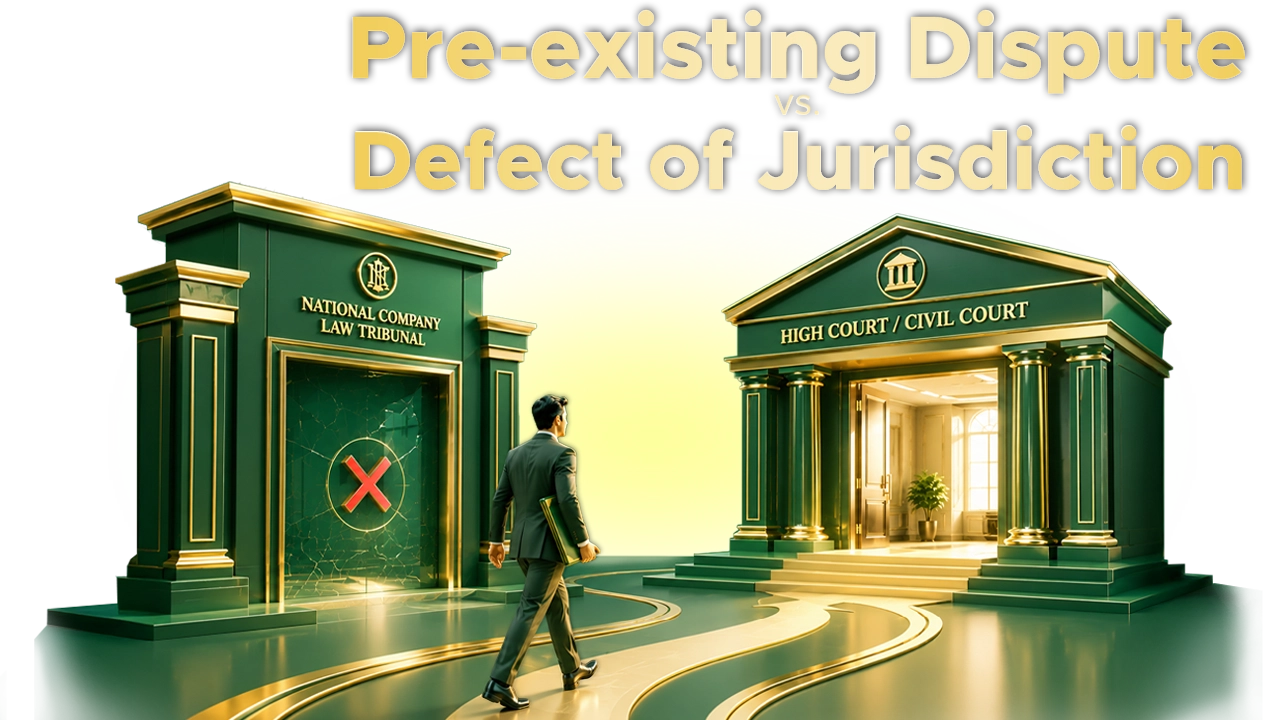
Could the dismissal of an insolvency petition on the grounds of a “pre-existing dispute” be categorized as a “defect of jurisdiction or other cause of a like nature,” thereby allowing a plaintiff to save their civil suit from the bar of limitation? In the significant ruling of Jones Lang Lasalle Property Consultants (India) Pvt. Ltd. v. M. A. Leasing and Construction Pvt. Ltd. and Ors.1 The High Court of Calcutta accepted the argument. The Court held that Section 14(1) of the Limitation Act, 1963, must be interpreted liberally to advance justice, ensuring that a diligent litigant is not non-suited simply because they first approached a forum the National Company Law Tribunal (NCLT) which was statutorily barred from entertaining the claim due to the nature of the dispute rather than the merits of the debt itself.
The factual matrix of this case began when the plaintiff, a property consultant, sought unpaid fees for services rendered to the defendants. Following a statutory demand notice under Section 8 of the Insolvency and Bankruptcy Code (IBC) in late 2019, the plaintiff initiated a Section 9 IBC proceeding before the NCLT in July 2020. However, on September 10, 2023, the NCLT dismissed the application, observing that a “pre-existing dispute” existed between the parties, which precluded the tribunal from admitting the insolvency petition. Seeking to recover its dues, the plaintiff subsequently filed a commercial suit before the High Court in December 2025. The primary hurdle was limitation: the suit was filed well beyond the standard three-year period unless the time spent bona fide before the NCLT was excluded under Section 14 of the Limitation Act.
The Court’s rationale centered on the broad and “extended meaning” of the phrase “other cause of a like nature” found in Section 14. Justice Aniruddha Roy observed that while the NCLT might have the territorial and subject-matter jurisdiction to hear insolvency cases, the existence of a prior dispute acts as a “jurisdictional bar” that inhibits the tribunal from entertaining the matter on its merits. Drawing from the Supreme Court’s decision in Sesh Nath Singh v. Baidyabati Sheoraphuli (2021)2, the Court emphasized that Section 238-A of the IBC expressly applies the Limitation Act to insolvency proceedings “as far as may be.” The Court further relied on Roshanlal Kuthalia v. R. B. Mohan Singh Oberoi (1975)3 and M. P. Steel Corporation v. Commissioner of Central Excise (2015)4 to reinforce that Section 14 is a “beneficent provision” intended to protect litigants against technical failures of a forum.
In distinguishing this case from unfavorable precedents, the Court addressed HPCL Bio-Fuels v. Shahaji Bhandudas Bhad (2024)5. It noted that while the HPCL case denied relief under Section 14(2) because the “reliefs” sought (insolvency resolution vs. appointment of an arbitrator) were different, the present suit fell under Section 14(1). Here, the “matter in issue” the occurrence of a default and the liability to pay was identical in both the Section 9 IBC proceeding and the civil suit for a money decree. Furthermore, the Court cited India Electric Works v. James Mantosh (1971) to support the view that the term “Court” in Section 14 includes quasi-judicial tribunals like the NCLT.
Conclusion
Ultimately, the Court concluded that the plaintiff had acted with due diligence and good faith, instituting the civil suit within three months of the NCLT’s dismissal. By treating the NCLT’s inability to adjudicate due to a pre-existing dispute as a cause of “like nature” to a defect of jurisdiction, the Court allowed the exclusion of the three-year period spent in the insolvency forum. This judgment reinforces a vital safety net for commercial litigants, ensuring that the rigorous “threshold” requirements of the IBC do not inadvertently extinguish a creditor’s substantive right to seek recovery through traditional civil litigation.
Citations
- Jones Lang Lasalle Property Consultants (India) Pvt. Ltd. v. M. A. Leasing and Construction Pvt. Ltd. and Ors., (2026) ibclaw.in 2724 HC; C.S. (COM) 171/2025 ↩︎
- Sesh Nath Singh v. Baidyabati Sheoraphuli Cooperative Bank Ltd., (2021) 7 SCC 313 ↩︎
- Roshanlal Kuthalia v. R. B. Mohan Singh Oberoi, (1975) 4 SCC 628 ↩︎
- HPCL Bio-Fuels Ltd. v. Shahaji Bhandudas Bhad, 2024 SCC Online SC 3190 ↩︎
- India Electric Works Ltd. v. James Mantosh, (1971) 1 SCC 24 ↩︎
Expositor(s): Adv. Jahnobi Paul,
This article is for information only and is not legal advice. Read the disclaimer