Delhi High Court · IPR Laws
Can a Trademark Lapse Without Effective Notice? Delhi High Court Clarifies the Scope of Section 25(3)
On this page

A trademark registration represents decades of commercial reputation, consumer trust and market goodwill. In Rajinder Singh v. Registrar of Trade Marks1, the Delhi High Court was confronted with a troubling question: can such a valuable proprietary right be allowed to lapse simply because a renewal notice was sent to an address that the Trade Marks Registry itself had long stopped using? The case arose from the trademark “B.P.R.”, used since 1979 in relation to electrical motors, compressors and pump sets. The proprietor had applied for registration in 1999, following which the mark became embroiled in opposition proceedings that continued for several years.
During this period, the petitioner repeatedly communicated changes relating to his authorised trademark agent. The updated address appeared in various filings, powers of attorney and correspondence. More importantly, the Trade Marks Registry itself acted upon those details. Hearing notices, procedural communications and ultimately the registration certificate were all issued to the revised address.
The difficulty arose in 2019 when the Registry issued the statutory renewal notice under Section 25(3) of the Trade Marks Act. Instead of using the address it had consistently relied upon throughout the proceedings, the notice was dispatched to an earlier address associated with the petitioner’s former agent. The notice was returned undelivered with the endorsement “no such firm.” As a result, the petitioner remained unaware that the registration was approaching expiry and discovered the lapse only years later through a newly appointed trademark agent.
Can the Registry Rely on Technical Non-Compliance?
The Trade Marks Registry defended its actions on a procedural ground. It argued that although updated addresses had been disclosed in several documents, the petitioner had never filed the prescribed form required for formally changing the address for service. Consequently, the Registry’s database continued to reflect the older address and the automated renewal notice was generated accordingly. At first glance, the argument appeared legally attractive. Trademark administration depends upon prescribed forms and standardised procedures. If proprietors do not follow those procedures, administrative systems inevitably become difficult to manage.
However, the Court found a fundamental flaw in the Registry’s position.
Justice Tushar Rao Gedela noted that the Registry had itself recognised and used the updated address for years. Official communications during the opposition proceedings had been sent there. Even the registration certificate and subsequent renewal-related correspondence had been dispatched to the same address. Having consistently relied upon that information, the Registry could not later claim ignorance of it merely because a particular form had not been filed. The Court therefore rejected the argument that procedural deficiencies could justify the failure to provide effective notice.
Section 25(3): A Substantive Protection, Not a Formal Ritual
The most important aspect of the judgment lies in its interpretation of Section 25(3) of the Trade Marks Act, 1999. The provision requires the Registrar to notify the registered proprietor before a trademark registration is removed for non-renewal. The Court emphasised that this requirement is not a routine administrative step but a substantive safeguard designed to protect valuable intellectual property rights.
In reaching this conclusion, the Court relied heavily on its earlier decision in Coldsmiths Retail Services Pvt. Ltd. v. Registrar of Trade Marks2. In that case the Delhi High Court stressed that the obligation to issue renewal notices cannot be treated as a mere procedural formality because failure to renew may expose an established trademark to loss of exclusivity and potential appropriation by third parties. The Court reiterated that Section 25(3) serves an important protective function within the statutory scheme. Its purpose is to ensure that a proprietor receives a genuine opportunity to preserve a registered trademark before suffering the drastic consequence of removal from the register.
The Emerging Judicial Trend on Trademark Renewals
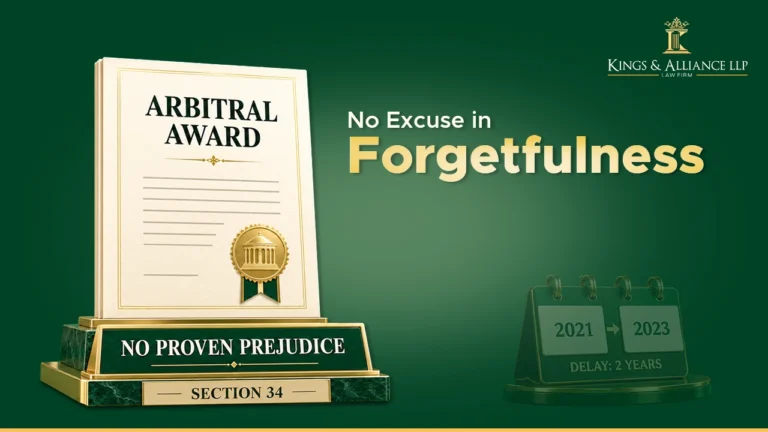
The Court referred to Charanjiv Kumar Taneja trading as Chirag Enterprises v. Registrar of Trade Marks3, where the Delhi High Court condoned a delay of nearly sixteen years because the statutory notice requirements had not been properly fulfilled. Similarly, in Coldsmiths, a delay of approximately two years was overlooked where the Registry had failed to comply with its obligations under Section 25(3).
Building upon those precedents, the Court in Rajinder Singh held that the petitioner’s delay of approximately six and a half years could not defeat his claim where the statutory notice itself had not been effectively served.
Conclusion
The significance of Rajinder Singh v. Registrar of Trade Marks extends far beyond a dispute over an incorrect address. The statutory safeguards governing their renewal therefore cannot be interpreted in a manner that prioritises administrative convenience over substantive fairness. By holding the Registry to the consequences of its own conduct, the Delhi High Court reaffirmed a principle that is becoming increasingly evident in trademark jurisprudence: the law may require procedural compliance, but it does not permit valuable proprietary rights to be lost through procedural formalism when the authority itself possessed the information necessary to prevent the loss. In an era where intellectual property administration is becoming increasingly automated, the decision serves as a timely reminder that statutory rights cannot be reduced to database entries. Where the consequence is the extinction of a valuable trademark, meaningful notice is not merely desirable, it is indispensable.
Citations
- Rajinder Singh v. The Registrar of Trade Marks, (W.P.(C)-IPD 4/2026, judgment dated 12.05.2026) ↩︎
- Coldsmiths Retail Services Private Limited v. Registrar of Trade Marks, 2026 DHC 1332 ↩︎
- Charanjiv Kumar Taneja Trading as Chirag Enterprises v. Registrar of Trade Marks, 2023 DHC 2634 ↩︎
Expositor(s): Adv. Aparna Shukla,
This article is for information only and is not legal advice. Read the disclaimer