GST Litigation
Kerala High Court on ISD, Cross-Charge and ITC Distribution Under GST
On this page
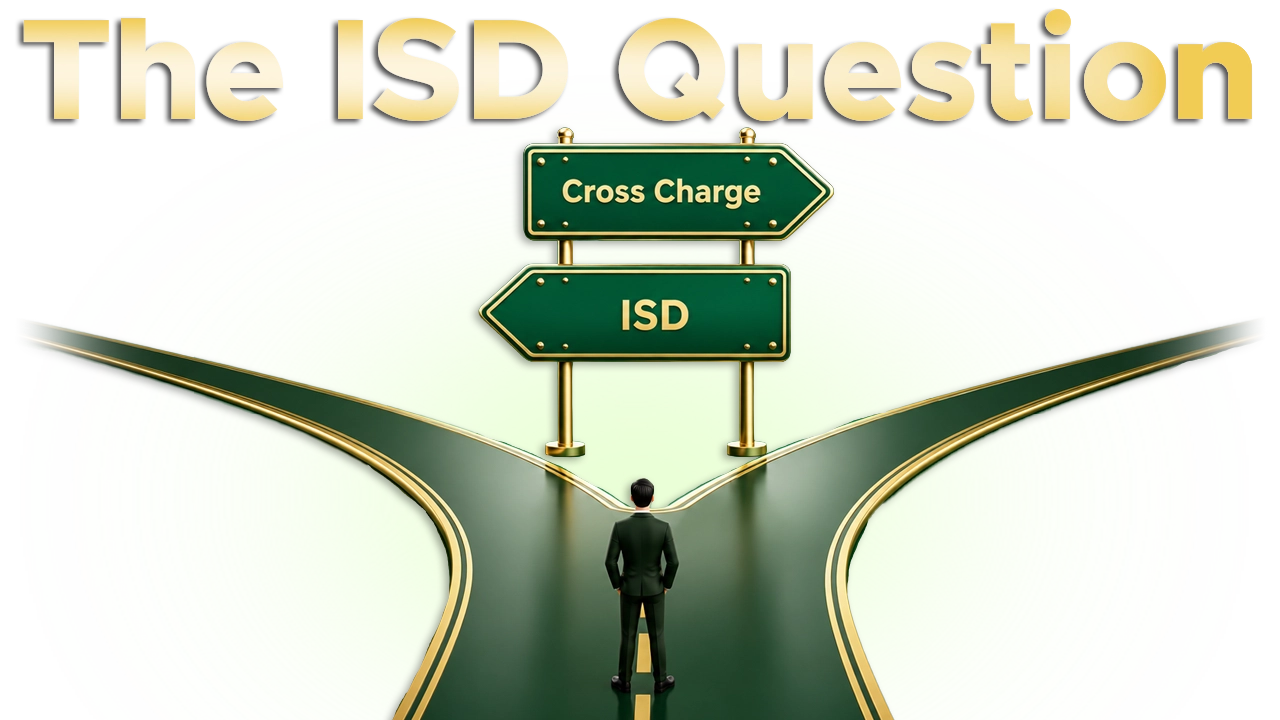
Can GST authorities deny input tax credit and impose tax demands merely because an assessee distributed common credits without obtaining an Input Service Distributor (ISD) registration? This question came before the Kerala High Court in Intertek India Pvt. Ltd. v. Assistant Commissioner of Central Taxes and Central Excise1, where the Court examined the validity of a demand exceeding ₹2.62 crore arising from imported services and the distribution of credits among multiple GST registrations. The decision is significant because it addresses a long-standing controversy under GST: whether ISD registration was mandatory before the Finance Act, 2024 amended the statutory framework.
Background of the Dispute
Intertek India, a multinational enterprise with registrations across several States, received IT infrastructure and support services from its foreign parent company. Although the foreign supplier’s invoice was issued in the name of the company’s Delhi office, payment was made by the Kerala registration, which discharged GST under the reverse charge mechanism (RCM) and availed input tax credit (ITC). Since the services benefited multiple registrations across India, the costs and credits were subsequently allocated among the various units.
During a GST audit, the department challenged this arrangement on two grounds. First, it argued that the Kerala registration could not avail ITC because the original invoice was issued to the Delhi registration. Second, it contended that the company had distributed credits to other registrations without obtaining ISD registration and had therefore violated the CGST Act. A demand of ₹1,31,14,220 along with an equivalent penalty was consequently confirmed.
ITC on Imported Services
The Court rejected the department’s objection regarding availment of ITC.
Referring to Sections 2(93), 9(3) and 16 of the CGST Act, the Court noted that under the reverse charge mechanism, the relevant consideration is identifying the “recipient” of the service. Since the Kerala registration had paid the consideration and discharged GST liability under RCM, it qualified as the recipient for GST purposes.
The Court further observed that in the case of imported services, entitlement to ITC is not dependent upon the foreign supplier’s invoice. Rule 36 of the CGST Rules specifically recognises a self-invoice issued under Section 31(3)(f) as a valid document for claiming credit. Since the petitioner had issued the prescribed self-invoice and paid tax under reverse charge, the conditions for availing ITC stood satisfied. Accordingly, the Court held that the credit was validly availed.
Was ISD Registration Mandatory?
The more important issue concerned the distribution of credits among the company’s various registrations.
The department argued that once common credits were distributed, the petitioner was required to operate through the ISD mechanism and obtain separate ISD registration. The Court, however, found no such requirement in the unamended statutory framework.
According to the Court, the pre-amendment version of Section 20 merely provided a mechanism through which an ISD could distribute credits. It did not state that all taxpayers distributing common credits were required to obtain ISD registration. In other words, the provision was enabling rather than mandatory.
The Court considered the Finance Act, 2024 amendment particularly significant. The amended provision expressly states that offices receiving invoices on behalf of distinct persons “shall be required” to obtain ISD registration. The Court observed that the introduction of such mandatory language strongly indicates that no equivalent obligation existed under the earlier provision. Had ISD registration already been compulsory, the amendment would have been unnecessary.
The Court also relied upon GST Council discussions and administrative guidance, including an FAQ stating that the ISD mechanism was not mandatory and merely provided one method of distributing credits. These materials further supported the conclusion that the law did not impose a compulsory ISD requirement during the relevant period.
The significance of the ruling extends beyond the facts of the case.
Since the introduction of GST, businesses operating through multiple registrations have frequently faced disputes regarding ISD, cross-charge arrangements and the allocation of common credits. Tax authorities have often taken the position that ISD was mandatory whenever common services were procured centrally and utilised across different registrations. Taxpayers, on the other hand, have maintained that ISD was merely one available mechanism.
The Kerala High Court’s decision provides substantial support for the assessee view, at least for periods prior to the Finance Act, 2024 amendment. More importantly, it recognises that the amendment introduced a new statutory obligation rather than merely clarifying an existing one.
Conclusion
In Intertek India Pvt. Ltd. v. Assistant Commissioner of Central Taxes and Central Excise, the Kerala High Court held that ITC on imported services could not be denied merely because the foreign supplier’s invoice was addressed to another registration when the assessee had discharged GST under reverse charge and complied with the self-invoicing requirements. More significantly, the Court held that the pre-amendment GST framework did not make ISD registration mandatory for the distribution of common credits among distinct persons.
For businesses facing legacy disputes concerning ISD, cross-charge arrangements and common service allocations, the judgment provides an important precedent and may have implications far beyond the ₹2.62 crore demand that gave rise to the litigation.
Citation
- Intertek India Pvt. Ltd. v. Assistant Commissioner of Central Taxes and Central Excise, WP(C) No. 30075 of 2024, decided on 8 June 2026 (Kerala High Court) ↩︎
Expositor(s): Adv. Jahnobi Paul
This article is for information only and is not legal advice. Read the disclaimer