Intellectual Property Rights · IPR Laws
Leading and Essential: Bombay HC Restrains Dabur’s Use of ‘NEEM’ as a Registered Trademark
On this page
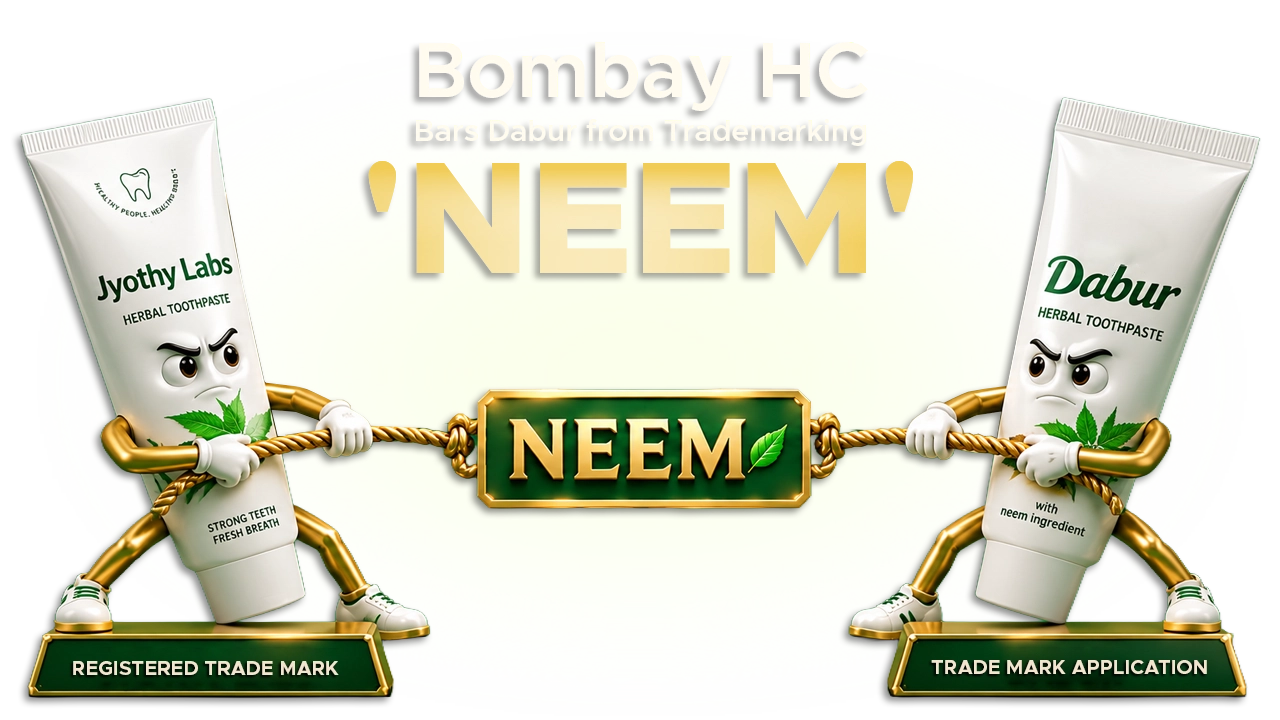
Can a word that a company never separately registered still be protected as a trade mark? The Bombay High Court answered yes in Jyothy Labs Ltd. v Dabur India Ltd.1 (order dated 10 August 2026), restraining Dabur from using “NEEM” as the leading feature on its domestic toothpaste packaging. Justice Arif S. Doctor’s interim order applies the essential-feature doctrine to protect an unregistered component of a composite mark, and holds that a party who seeks registration of a label without disclaiming a word cannot later argue in infringement proceedings that the same word is generic. For trade mark practitioners, the ruling is a useful illustration of how registration conduct before the Trade Marks Registry can come back to bind a party in subsequent litigation.
Jyothy Labs has used “NEEM” in connection with toothpaste since around 1920, through its predecessor Calcutta Chemical Company, and holds three subsisting registrations in Class 3 in which “NEEM” is the leading feature, none of them carrying a disclaimer over the word. Dabur, which had long used “NEEM” only as a small, descriptive ingredient callout on its international packaging, introduced a domestic label in late 2020 displaying “NEEM” centrally, in large bold lettering. Jyothy Labs sued for infringement and passing off. Dabur resisted on several grounds: that Jyothy Labs held no standalone registration for “NEEM” and so Section 17 of the Trade Marks Act2 barred any claim over the word alone; that “NEEM” was generic or descriptive of a toothpaste category, much like “decaf coffee” or “herbal tea”; that the word had become common to the trade, given roughly twenty-two other neem-based toothpaste brands in the market; and that its prominent “DABUR” house mark dispelled any likelihood of confusion. Jyothy Labs sought an interim injunction restraining Dabur from using the impugned label, while expressly clarifying it was not seeking to monopolise the word “NEEM” itself.
The Court’s Reasoning
At the interlocutory stage, the Court held it was “not required to carry out a mini trial,” and that most of Dabur’s defences; genericness, common-to-trade use, and the effect of disclaimers on two long-lapsed earlier registrations were fact-heavy questions “which would require evidence to be led and would have to be determined at trial.” What the Court could and did decide at this stage turned on a narrower legal point: whether Section 17 of the Trade Marks Act prevents a proprietor from relying on an unregistered but essential feature of its composite mark. The Court held it does not, section 17(2) “prevents the proprietor from asserting an independent monopoly or exclusivity over a part of the mark which is common to the trade, non-distinctive or otherwise incapable of separate protection,” but “does not… mean that the proprietor of a composite or label mark is precluded from relying upon the appropriation of its essential and distinctive feature while establishing deceptive similarity.” Drawing on the Court’s earlier characterisation, in Brihan Karan Sugar Syndicate3, of an essential feature as a “synecdoche”, a part that stands for the whole, the Court held that allowing free appropriation of such a feature merely because it lacks independent registration would create an “open hunting season” over the distinctive components of composite marks.
On genericness, the Court found Dabur’s own evidence worked against it: material showing “NEEM” used across hair oil, soap, body mist, face wash, pet perfume, fertilisers, and detergents indicated the word does not immediately and exclusively evoke toothpaste, so that a consumer would need to make an “imaginative leap” to connect it to that specific product, placing it in the suggestive, not generic or descriptive, category. The Court also invoked estoppel against Dabur on two fronts: Dabur had itself sought registration of the impugned label with “NEEM” as its leading feature, without disclaiming the word, and had separately enforced its own rights over comparable oral-hygiene terms, “MESWAK” and “BABOOL,” against third parties including opposing a mark called “ARYAN BABOOL” despite a prominent house mark appearing alongside it. The Court found this conduct “most certainly a factor that would militate against the Defendant.” Finally, on the descriptive-use defence, the Court treated the unexplained shift between Dabur’s international and domestic packaging as decisive: Dabur’s only justification was that the domestic label was designed “to cater to the Indian market,” which the Court found offered no explanation “let alone a satisfactory explanation” for why “NEEM” needed to move from a small ingredient callout to the label’s dominant feature “a strong indicator that ‘NEEM’ has been consciously adopted and used as a source identifier.”
Jurisprudential Implications
This is an interim order, not a final adjudication; the Court was explicit that final determination of genericness, common-to-trade use, and the effect of the lapsed disclaimed registrations would require evidence to be led at trial. That said, the Court did not simply defer these questions; it reasoned through them substantively at the prima facie stage and found against Dabur on each. On genericity, it held that Dabur’s own evidence of “NEEM” being used across unrelated product categories actually supported Jyothy Labs’ case that the word was merely suggestive. On common-to-trade use, it held that Dabur had “not sufficiently discharged” the burden of showing actual and substantial third-party commercial use, mere presence on the Register being insufficient. What the order settles again, at the interim stage, is a proprietor’s ability to protect the leading feature of a composite mark without a standalone registration for that feature, reading Section 17 narrowly, confined to the situation where a party tries to monopolise ordinary trade vocabulary, rather than as a general bar on relying on essential features at all. The order also carries a caution for trade mark applicants: filing an application for a composite label without disclaiming a constituent word can be relied upon against the applicant later, if that same party subsequently argues the word is incapable of protection; the Court found this “inconsistent” with Dabur’s own defence.
The Court was careful to draw the injunction narrowly. It expressly clarified that “there shall be no fetter on the Defendant from using ‘NEEM’ per se in a descriptive manner on the impugned label or otherwise”; the restraint targets only the manner of Dabur’s use, its prominence and placement as a source identifier, not the word itself. A stay of six weeks was granted on Dabur’s request, meaning the practical effect of the order is not immediate.
Citations
- Jyothy Labs Ltd. v Dabur India Ltd. Commercial IP Suit No. 240 of 2021 ↩︎
- The Trade Marks Act, 1999 (Act 47 of 1999), s. 17 ↩︎
- Brihan Karan Sugar Syndicate Pvt. Ltd. v. Lokranjan Breweries Pvt. Ltd MIPR 2014 (3) 0107 ↩︎
Expositor(s): Adv. Pratistha Dahiya
This article is for information only and is not legal advice. Read the disclaimer